


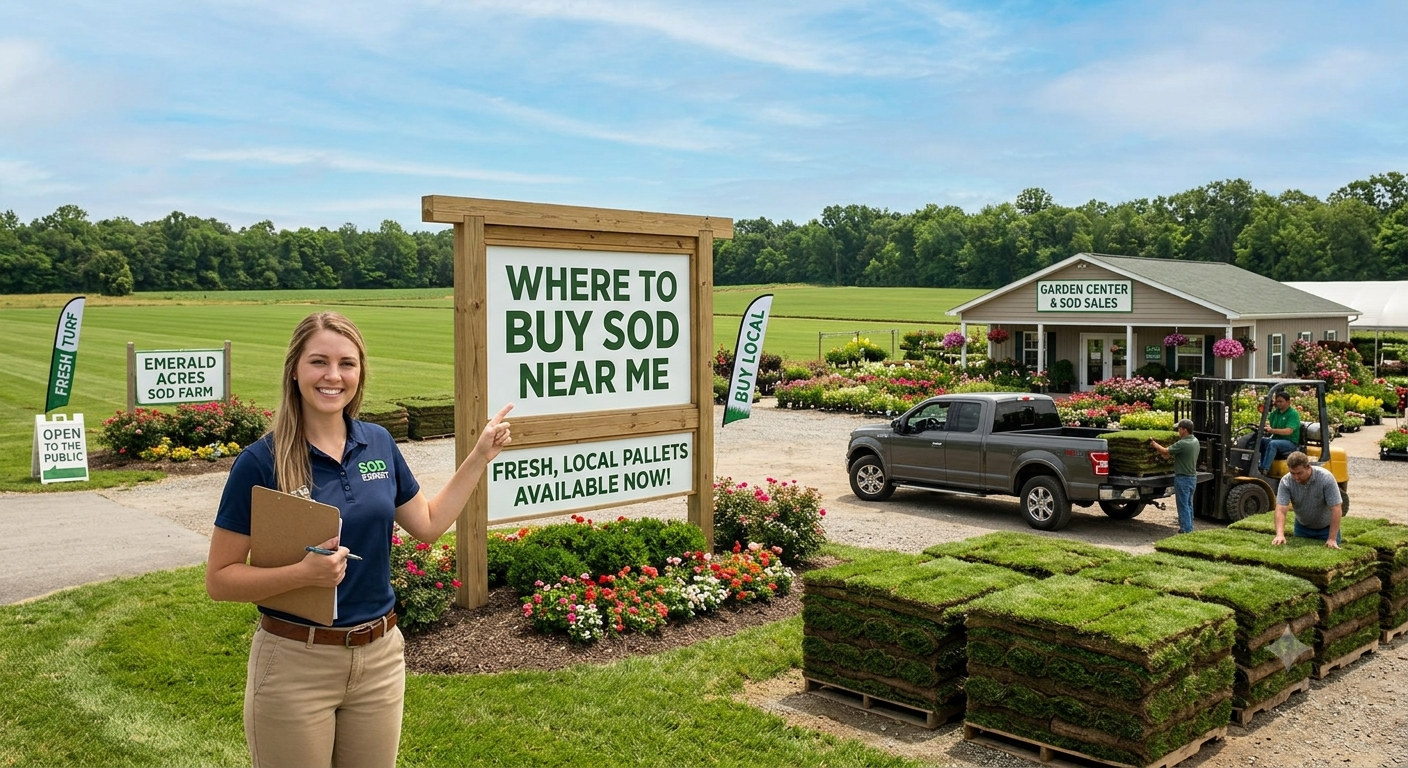
Anyone who has ever stood in a patchy, weed-choked backyard and dreamed of a thick, green, walk-on-it-barefoot lawn eventually asks the same question: where to buy sod near me. It sounds like a simple search, but the answer touches on soil science, regional climate patterns, local agriculture, and even small-town economics. This guide walks through everything you need to know before you type that phrase into a search bar again — from the history of turfgrass farming to state-by-state buying advice, real success stories, common pitfalls, and where the sod industry is headed next.
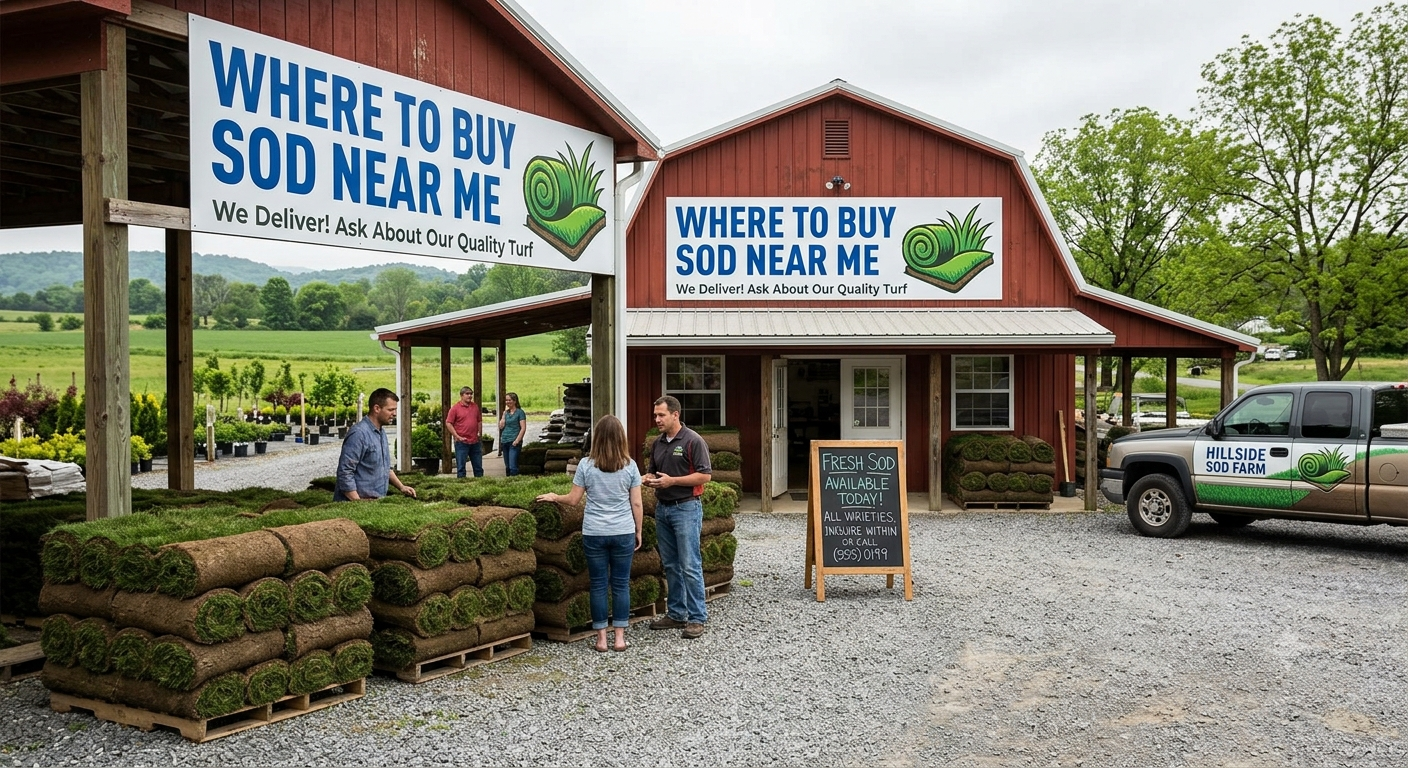
Understanding What Sod Actually Is and Why Buying Local Matters
Sod, sometimes called turf, is mature grass grown on a farm, harvested with its root system and a thin layer of soil intact, and rolled or stacked for transport. Unlike grass seed, which can take months to establish and is vulnerable to birds, wind, and uneven germination, sod gives you an instant, mature lawn within hours of installation. That instant gratification is precisely why so many homeowners search for where to buy sod near me rather than ordering seed online or shipping rolls across the country.
Buying locally isn’t just a matter of convenience. Sod is a living, perishable product. Once harvested, it begins to lose moisture and can start yellowing or developing fungal issues within twenty-four to forty-eight hours if it isn’t laid down and watered properly. A sod farm two hours from your home will almost always outperform one shipped from three states away, because the grass spends less time in transit, arrives fresher, and — critically — is already suited to your local climate, soil pH, and pest pressures. This is the core reason searches for where to buy sod near me consistently outperform generic “buy grass sod online” queries: proximity genuinely determines lawn success.
A Brief History of the Sod and Turfgrass Industry
The commercial sod industry as we know it today is a relatively modern development, though the idea of transplanting grass is centuries old. Wealthy estate owners in eighteenth-century England experimented with transplanting turf from meadows to create instant lawns around manor houses, a labor-intensive practice reserved for the aristocracy. The concept crossed the Atlantic and took root in American landscaping culture during the early twentieth century, particularly as golf courses expanded and required rapid, uniform turf establishment.
The real turning point came after World War II, when suburban expansion created enormous demand for fast, reliable lawn establishment. Returning veterans buying homes in newly built subdivisions wanted lawns immediately, not the six months required for seed to mature. Turfgrass farmers responded by mechanizing the harvest process, developing sod-cutting machinery that could lift uniform strips of grass with intact root mats. By the 1950s and 1960s, regional sod farms had become a fixture of American agriculture, particularly in states with long growing seasons like Florida, Texas, and California.
Over the following decades, breeding programs at land-grant universities developed grass cultivars tailored to specific regional conditions — drought-tolerant Bermuda varieties for the South, cold-hardy Kentucky bluegrass blends for the Midwest and Northeast, and shade-tolerant fescues for wooded suburban lots. This regional specialization is exactly why the question of where to buy sod near me matters so much today: a sod farm in Georgia is growing an entirely different genetic profile of grass than one in Minnesota, and the two are not interchangeable.
Why the “Near Me” Factor Is a Genuine Agronomic Consideration, Not Just Convenience
When people search where to buy sod near me, search engines interpret this as a hyperlocal intent query, similar to searching for a nearby restaurant or pharmacy. But unlike many local searches, this one carries real horticultural weight. Grass grown in sandy, well-drained soil in central Florida behaves very differently once transplanted into the heavier clay soils of the Piedmont region in Georgia or the Carolinas. Local sod farms typically grow their turf in soil conditions that closely resemble what you’ll find in area lawns, which reduces transplant shock significantly.
There’s also a policy and regulatory framework layer to consider. Many municipalities and water districts, particularly in drought-prone regions of the Southwest, have adopted turf-related ordinances that restrict which grass species can be installed in new landscaping, or that offer rebates for low-water turf varieties. A reputable local sod supplier will already be compliant with these regional rules and can advise you on which grass types satisfy local water-conservation codes, something a distant online retailer simply cannot do. In this sense, sourcing sod locally isn’t only about freshness — it’s about aligning your purchase with the regional policy environment governing landscaping and water use in your specific county or city.
How to Actually Find and Evaluate Local Sod Suppliers
Once you’ve decided that buying close to home is the right approach, the practical work of finding where to buy sod near me begins. Start with a straightforward online search combined with map results, which will typically surface sod farms, garden centers, and landscaping supply yards within a reasonable driving radius. Pay attention to the difference between an actual sod farm — which grows its own turf — and a garden center that simply resells sod sourced from a farm elsewhere. Buying direct from a farm often means fresher product and better pricing, though a well-run garden center can still offer excellent quality if their turnover is fast.
Cooperative extension offices are an underused resource in this search. Nearly every state maintains a network of agricultural extension offices, often affiliated with the state’s land-grant university, and these offices frequently maintain lists of licensed sod producers in the area. They can also tell you which grass species are best suited to your specific micro-region, factoring in rainfall patterns, soil type, and typical pest pressure.
Local landscaping contractors are another valuable source of leads. Professionals who install lawns for a living have already vetted the sod farms in their operating area and know which ones deliver consistent quality. Even if you plan to install the sod yourself, a quick phone call to two or three landscaping companies asking where they source their turf can save you from an expensive mistake.
When you do identify a candidate supplier, a site visit is worth the extra effort. Reputable farms are generally happy to let customers walk the fields, and this gives you a chance to inspect the grass for uniform color, root density, and freedom from weeds or disease before you commit to an order. Ask about the harvest schedule — sod cut to order, ideally within twenty-four hours of delivery, is far superior to pallets that have been sitting in a distribution yard for several days.
Implementation: From Purchase to a Thriving Lawn
Finding the right supplier is only the first half of the process. Proper implementation determines whether your investment turns into a lush, durable lawn or a costly disappointment. Begin with soil preparation well before your sod delivery date. The planting bed should be tilled, graded for proper drainage away from the foundation, and amended with compost or topsoil if the existing soil is compacted or nutrient-poor. A basic soil test, often available through the same extension offices mentioned earlier, will tell you whether you need to adjust pH with lime or sulfur before laying turf.
Timing the delivery matters enormously. Sod should be installed the same day it arrives whenever possible, and certainly within twenty-four hours. If you must delay, keep the pallets in a shaded area and lightly moisten the rolls to prevent them from drying out or overheating, which can cause the grass to essentially cook itself under plastic wrap or stacked rolls.
Installation itself follows a brick-laying pattern, with seams staggered row to row to prevent visible lines and to encourage the roots to knit together into a seamless surface. Edges should be pressed firmly against each other without overlapping or leaving gaps, since gaps are where weeds tend to establish first. Immediately after laying, the entire area needs a deep watering, enough to saturate not just the sod but the soil beneath it, encouraging roots to grow downward rather than staying shallow.
The first two to three weeks after installation are the critical establishment period. During this window, daily watering is typically necessary, tapering off gradually as roots take hold. Foot traffic should be minimal, and mowing should wait until the grass has rooted firmly enough that it doesn’t lift when gently tugged. Homeowners who search where to buy sod near me and then rush through this establishment phase are the ones most likely to end up disappointed, regardless of how good the sod itself was at the time of purchase.
State-Level and Regional Variation in Sod Availability and Best Practices
Sod availability, pricing, and grass type vary considerably depending on where you live, and understanding this regional impact helps set realistic expectations before you start calling suppliers.
In the Southeast, including states like Georgia, Alabama, and the Carolinas, warm-season grasses such as Bermuda, Zoysia, and Centipede dominate the sod farm landscape. These grasses thrive in heat and humidity and generally offer excellent availability throughout the growing season, with numerous family-owned sod farms operating in rural counties outside major metro areas. This regional concentration of sod farming has become a meaningful contributor to rural development in parts of the Southeast, providing steady agricultural income and seasonal employment in counties that might otherwise rely heavily on row-crop farming alone.
In Florida, St. Augustine grass is the dominant residential choice thanks to its shade tolerance and salt resistance, valuable in coastal areas. The state’s year-round growing season means sod farms here operate almost continuously, and buyers searching where to buy sod near me in Florida typically have the shortest wait times of anywhere in the country.
The transition zone states — a band running roughly through Tennessee, Kentucky, Virginia, and parts of Missouri — present a more complicated picture, since neither purely warm-season nor purely cool-season grasses thrive perfectly there. Tall fescue blends have become the practical compromise, and local sod farms in this region often specialize specifically in fescue cultivars bred for transition-zone resilience.
Northern and Midwestern states, including Minnesota, Wisconsin, Illinois, and much of the Northeast, rely primarily on Kentucky bluegrass, perennial ryegrass, and fine fescue blends. Sod farms here operate on a shorter seasonal window, generally from spring through early fall, so timing your search for where to buy sod near me matters more in these states — ordering in the height of a July drought or after the ground has frozen simply won’t work.
In arid Southwestern states like Arizona, Nevada, and parts of California, the calculation shifts again. Water scarcity has driven both stricter regional policy frameworks around turf installation and a genuine cultural movement toward xeriscaping. Many municipalities in this region now offer turf-replacement rebate programs that pay homeowners to remove grass lawns entirely in favor of drought-tolerant landscaping. Sod suppliers in these states have adapted by focusing on low-water Bermuda hybrids and by openly advising customers on how much lawn area actually makes sense given local water restrictions.
Success Stories: How Local Sod Sourcing Transformed Real Lawns
Consider the experience of a homeowner in suburban Ohio who inherited a lawn overrun by crabgrass and bare patches after years of neglect by a previous owner. Rather than gambling on seed through an unpredictable Midwestern spring, she searched for where to buy sod near me and found a bluegrass sod farm operating about forty minutes outside the city. Because the farm’s soil composition closely matched her own yard’s clay-heavy profile, the sod established with minimal shock, and within three weeks she had a lawn thick enough to host a backyard gathering.
A different story unfolded in a small Georgia community where a family-run Bermuda sod farm had operated for three generations. As suburban development crept outward from a nearby metro area, demand for locally sourced sod surged, allowing the farm to expand from a modest operation into a business employing a dozen local workers during peak season. This kind of expansion illustrates the broader social and economic value of local sod farming: it isn’t just about lawns, but about sustaining agricultural livelihoods and contributing to the economic base of smaller communities.
In Arizona, a homeowners’ association overseeing a mid-sized subdivision worked with a local sod supplier to replace failing common-area lawns with a drought-tolerant hybrid Bermuda variety, cutting the community’s irrigation water use by nearly a third while keeping shared green spaces intact for children and pets. The project became something of a model for neighboring developments, showing that thoughtful turf selection — guided by advice from a knowledgeable local supplier — can reconcile the desire for green space with genuine water-conservation goals.
Common Challenges When Buying and Installing Sod Locally
Even with the right supplier, challenges can arise. Availability is a recurring issue during peak spring and early summer months, when demand for sod spikes as homeowners tackle landscaping projects simultaneously. Popular grass varieties can sell out weeks in advance at smaller farms, which means planning ahead rather than waiting until the last minute is essential.
Pricing inconsistency is another common frustration. Sod prices are typically quoted per pallet or per square foot, but the actual coverage per pallet can vary between suppliers, making apples-to-apples comparisons difficult unless you ask specifically about square footage per pallet and delivery fees. Delivery logistics themselves can also be tricky, particularly for properties with narrow driveways or difficult access, since sod pallets are heavy and typically require a forklift or pallet jack to unload.
Weather poses perhaps the biggest unpredictable risk. A late-spring cold snap, an unseasonable heatwave, or a stretch of heavy rain immediately after installation can all undermine even a well-executed sod project. Buyers should build some flexibility into their installation timeline and avoid scheduling delivery during extreme weather forecasts whenever possible.
Finally, there’s the challenge of matching grass type to site conditions accurately. Homeowners sometimes choose a grass variety based on what looks good in a neighbor’s yard without accounting for differences in sun exposure, soil drainage, or foot traffic patterns on their own property. A good local supplier will ask pointed questions about these conditions before recommending a specific cultivar, which is one more reason why buying from a knowledgeable nearby source tends to outperform an anonymous online purchase.
Sod Versus Seed and Other Lawn Establishment Methods
It’s worth stepping back to compare sod against the alternatives, since not every project actually calls for sod. Grass seed remains significantly cheaper per square foot and offers a wider variety of cultivar choices, since seed isn’t constrained by what a local farm happens to be growing. However, seed requires patience, consistent watering over several weeks, and carries real risk of uneven germination, erosion on sloped areas, and vulnerability to birds and heavy rain washing seed away before it roots.
Hydroseeding, a hybrid method that sprays a slurry of seed, mulch, and fertilizer onto prepared soil, splits the difference — it’s faster than traditional seeding and cheaper than sod, but still requires weeks of establishment time and careful watering discipline.
Artificial turf represents a completely different category, appealing to homeowners who want zero water use and minimal maintenance. It carries a much higher upfront installation cost, however, and lacks the cooling effect, biodiversity support, and natural drainage that living grass provides. For most homeowners who want a genuine lawn rather than a synthetic substitute, and who want results within days rather than months, sod remains the most reliable choice, which explains why the search where to buy sod near me continues to trend upward every spring across the country.
The Broader Policy and Community Context Around Lawns and Turf
Lawns occupy an interesting place in local policy discussions. In some regions, homeowners associations and municipal codes actively mandate maintained turf as part of neighborhood aesthetic standards, while in others, particularly drought-affected areas, policy has shifted toward incentivizing turf reduction. This creates a genuinely varied regional impact when it comes to sod demand: in the Southeast and Midwest, demand remains driven primarily by traditional aesthetic and functional preferences, while in the Southwest, demand is increasingly shaped by conservation-oriented rebate programs and updated water-use ordinances.
Some cities have also begun incorporating turfgrass considerations into broader community and social welfare planning, recognizing that accessible green space in public parks and shared residential areas contributes to physical activity, community gathering, and even measurable reductions in urban heat. Local sod farms, in this sense, aren’t just serving individual homeowners — they’re part of the supply chain that keeps community parks, school fields, and shared green spaces functional and safe for public use.
Future Prospects for the Sod Industry
Looking ahead, several trends are likely to shape how and where people buy sod. Breeding programs continue to develop increasingly drought-tolerant and low-maintenance grass cultivars, which will likely become the default recommendation from local suppliers even in regions that haven’t traditionally prioritized water conservation. Climate variability is also pushing sod farms in transition-zone states to experiment with more resilient blends capable of handling both hotter summers and occasional harsh winters.
Technology is changing the buying process itself. More sod farms now offer online ordering with delivery scheduling, square-footage calculators, and even satellite-imagery-based yard measurement tools, making the process of finding where to buy sod near me faster and more precise than it was even five years ago. At the same time, the fundamental logic of buying locally isn’t going away — freshness, regional suitability, and personalized advice from someone who understands your specific soil and climate will continue to matter more than convenience alone.
Sustainability will likely remain the dominant theme. Expect to see more sod farms adopting water-efficient irrigation practices themselves, more municipalities expanding rebate and incentive programs tied to low-water turf varieties, and continued growth in cultivars bred specifically to thrive with less water and fewer chemical inputs. For homeowners, this means that searching where to buy sod near me in the coming years will increasingly surface suppliers who can speak knowledgeably not just about grass color and texture, but about long-term water use, soil health, and regional environmental considerations.
Final Thoughts
The seemingly simple search for where to buy sod near me actually opens the door to a surprisingly rich set of considerations — regional climate suitability, soil science, local policy frameworks around water use, and the practical realities of installation and establishment. Homeowners who take the time to identify a genuinely local, reputable supplier, prepare their soil properly, and follow through on the critical early watering period consistently end up with lawns that outperform those installed carelessly or sourced from distant, less compatible farms. Whether you’re in the humid Southeast, the arid Southwest, or the seasonal Midwest, the fundamentals remain the same: buy fresh, buy local, and match the grass to your specific site conditions.