

Missing teeth can make it hard to eat your favorite foods or smile with confidence. Luckily, modern dentistry offers a wonderful fix known as full arch dental implants. Instead of putting a metal post in for every single missing tooth, a dentist uses a small number of strong posts. These special posts act like sturdy roots for a brand-new row of artificial teeth. It is like building a strong bridge that stays put, giving you back a full and healthy set of teeth.
Why Choose This Treatment Over Regular Dentures?
Traditional dentures can sometimes slip around, click, or cause sore spots on your gums. That can make social events or eating out feel a bit stressful. Full arch dental implants solve this problem by anchoring directly into your jawbone. Because they stay completely fixed in place, you do not have to worry about embarrassing slips. You can laugh, talk, and enjoy crunchy apples or fresh corn on the cob without a single worry on your mind.
How the Procedure Works Step by Step
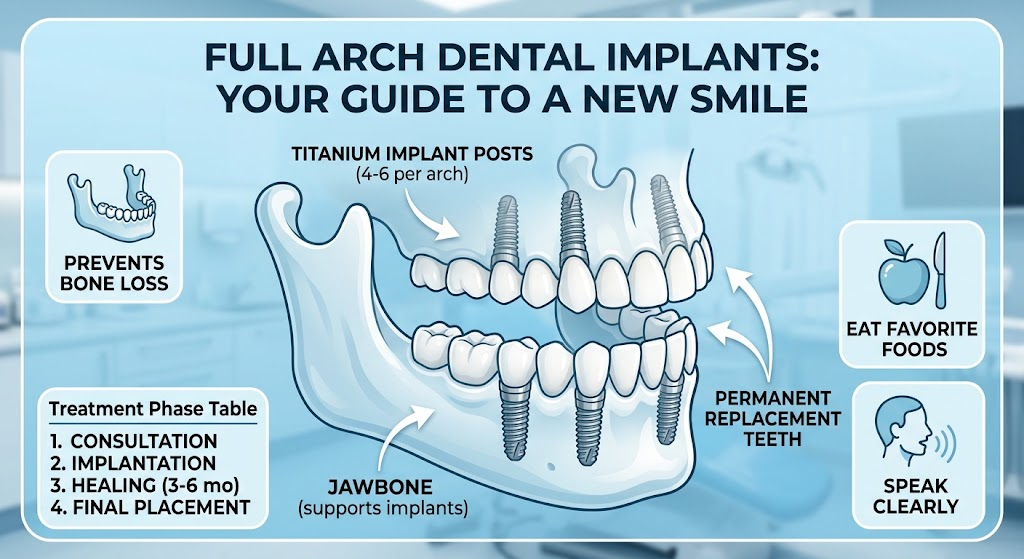
Getting full arch dental implants is a journey that happens in a few careful stages. First, your dental team will take special pictures and scans of your mouth to plan the best angles for the posts. Next, the surgeon places the titanium posts gently into your jawbone during a safe visit. Over the next few months, your bone heals and grows around these posts. Finally, your custom-made, natural-looking set of teeth is securely attached on top.
Protecting Your Jawbone Health
When you lose teeth, the jawbone underneath stops getting the workout it needs. Over time, this can cause the bone to shrink and change the shape of your face. Full arch dental implants act just like real tooth roots by giving your jawbone the daily stimulation it craves. This clever process stops bone loss in its tracks, helping you maintain a youthful facial structure and a strong, healthy jaw for many years.
Enjoying Your Favorite Foods Again
Living with missing teeth or loose dentures often means sticking to soft, easy-to-chew foods. This limitation can take the fun out of dining out with friends and family. Once you heal from getting full arch dental implants, your biting power comes rushing back. You can finally bite into crisp vegetables, juicy steaks, and chewy treats without discomfort. Better chewing also helps your tummy digest food much more easily.
Speaking Clearly and Naturally
Missing teeth or ill-fitting false teeth can change the way air moves through your mouth when you talk. This can lead to whistling sounds or slurred words that make you feel shy. Full arch dental implants stay firmly locked in position, giving your tongue a steady surface to touch. This stability lets you pronounce words clearly, speak with total ease, and chat happily without constantly checking your teeth.
Simple Daily Cleaning Habits
Taking care of full arch dental implants is surprisingly straightforward and does not require messy glues or soaking cups. Because they do not come out of your mouth, you treat them almost like your original teeth. You simply brush them twice a day with a soft toothbrush and use special floss or water flossers to clean underneath the arch. Sticking to these easy daily habits keeps your new smile bright and fresh.
Are You a Good Candidate?
Most people who have lost most or all of their teeth can be great candidates for full arch dental implants. However, your gums need to be healthy, and you must have enough jawbone to support the tiny titanium posts. If you have experienced some bone loss, do not panic. Special techniques can often prepare your mouth so you can still safely enjoy the life-changing benefits of this permanent treatment.
Patient Biography & Treatment Overview Table
| Treatment Phase | What Happens During This Stage | Typical Timeframe |
| Initial Consultation | Dentist takes 3D scans, evaluates your gums, and maps out your custom smile plan. | Day 1 |
| Implantation Surgery | Small titanium posts are placed into the upper or lower jawbone securely. | 1 Day |
| Healing & Bonding | Osseointegration occurs as the jawbone fuses tightly with the titanium posts. | 3 to 6 Months |
| Final Placement | Your permanent, custom-designed set of teeth is attached firmly to the posts. | Final Visit |
Long-Term Value and Investment
While the upfront cost of full arch dental implants might seem high compared to standard dentures, they are built to last for decades. Traditional dentures often need frequent relining, adjustments, or total replacements every few years. Because full arch dental implants use durable materials like titanium and strong porcelain, they save you money and hassle over the long run, making them a smart investment in your health.
Frequently Asked Questions
1. Do full arch dental implants hurt during the procedure?
The surgery is performed using numbing medicine and sedation, so you will not feel pain while it happens. Mild soreness afterward is normal, but your doctor will give you medicine to keep you comfortable while you heal.
2. How long do full arch dental implants last?
With great daily brushing, flossing, and regular dental checkups, these implants are designed to last for many decades or even the rest of your life.
3. Can I eat regular food right after getting implants?
During the first few months of healing, your dentist will recommend a soft-food diet to protect the posts. Once your permanent teeth are locked in, you can go back to eating all your favorite foods.
4. What is the difference between dentures and full arch implants?
Traditional dentures rest loosely on top of the gums and can slip out. Full arch implants are screwed securely into the jawbone, acting just like real, unmoving teeth.
5. Will people be able to tell I have fake teeth?
Not at all! Your new teeth are custom-crafted to match the exact shape, shade, and size of natural teeth, giving you a gorgeous, completely authentic smile.
6. What happens if I smoke or have health issues?
Smoking or uncontrolled health issues like diabetes can slow down healing and risk implant success. Your dentist will review your health history to help you get the safest and best results possible.