

If you have ever searched for where to sell coins near me, you are not alone. Thousands of people inherit coin collections, discover old coins tucked away in storage, or decide to cash in valuable collectibles each year. While selling coins may seem straightforward, finding a trustworthy buyer who offers a fair price requires knowledge, preparation, and careful research. Whether you own antique coins, commemorative pieces, silver dollars, gold coins, or foreign currency, understanding the market can make a significant difference in your final payout.
The coin collecting industry has grown steadily over the years as collectors, investors, and historians continue to seek rare and valuable pieces. Local coin dealers, auction houses, pawn shops, precious metal buyers, and online marketplaces all offer opportunities to sell coins, but each option comes with its own advantages and drawbacks. Choosing the right selling method depends on your collection, your financial goals, and how quickly you want to complete the sale.
Many first-time sellers make the mistake of accepting the first offer they receive without understanding the true value of their collection. Others struggle to identify reputable buyers or fail to recognize the importance of grading and authentication. Learning about coin valuation, market demand, and buyer reputation helps you avoid costly mistakes while ensuring your coins receive the attention they deserve.
This comprehensive guide explains everything you need to know before selling your coins. From understanding coin values to identifying trustworthy buyers, preparing your collection, and maximizing your return, you’ll gain practical insights that help you make informed decisions. If you’ve been wondering where to sell coins near me, this guide will walk you through every important step so you can sell with confidence and achieve the best possible results.
The History of Coin Collecting and Coin Trading
Coins have served as a medium of exchange for thousands of years, but their significance extends far beyond commerce. Ancient civilizations such as the Greeks, Romans, Persians, and Chinese produced coins that reflected their rulers, cultural achievements, and economic strength. Over time, these coins became valuable historical artifacts, attracting collectors who appreciated both their monetary and historical importance.
Coin collecting, often known as numismatics, has existed for centuries. Wealthy nobles and monarchs in medieval Europe assembled impressive collections of rare coins as symbols of education and prestige. During the Renaissance, scholars began studying coins to better understand ancient civilizations, transforming coin collecting into an academic discipline as well as a hobby.
The nineteenth and twentieth centuries witnessed remarkable growth in organized coin collecting. National mints introduced commemorative coins, while governments produced special editions celebrating historical events, anniversaries, and notable individuals. These issues sparked widespread public interest and encouraged many families to begin collecting coins as long-term keepsakes or investments.
As the internet transformed commerce, coin trading expanded beyond local communities. Collectors could now connect with buyers and sellers worldwide, compare market prices instantly, and research rare pieces more efficiently than ever before. Despite these technological advances, local coin shops continue to play a vital role because they provide face-to-face evaluations and immediate transactions. This explains why many people still search for where to sell coins near me when they decide to liquidate a collection.
Today, coin collecting remains one of the world’s most respected hobbies. Millions of enthusiasts actively buy, sell, and trade coins while preserving pieces of history for future generations. The market includes casual collectors, professional dealers, museums, investors, and auction companies, creating a vibrant ecosystem that supports both historical preservation and financial investment.
Understanding Why Coins Have Value
Before deciding where to sell coins near me, it is important to understand why some coins are worth only their face value while others can sell for hundreds, thousands, or even millions of dollars.
Several factors determine a coin’s market value. Rarity is one of the most significant. Coins with low mintages or limited surviving examples naturally attract higher demand among collectors. Even common coins can become valuable if they feature unusual production errors or unique variations.
Condition also plays a crucial role. Collectors often pay substantial premiums for coins that remain in excellent condition with minimal wear. Professional grading organizations evaluate coins using standardized grading scales, making it easier for buyers and sellers to agree on fair prices.
Metal content represents another major factor. Gold, silver, platinum, and palladium coins possess intrinsic value because of their precious metal composition. Even if a coin has little collectible appeal, its metal content may still command a strong market price.
Historical significance adds another layer of value. Coins associated with important historical periods, famous rulers, significant events, or discontinued minting programs often become highly desirable. Collectors appreciate the stories these coins tell, increasing demand across the marketplace.
Market demand changes over time as collecting trends evolve. A particular series may become increasingly popular, causing prices to rise, while other categories may experience temporary declines. Staying informed about current market conditions helps sellers recognize favorable opportunities.
Authentication is equally important. Certified coins verified by recognized grading services generally inspire greater confidence among buyers, often resulting in stronger offers compared to uncertified pieces.
Different Types of Coins You Can Sell
Understanding your collection is one of the first steps before researching where to sell coins near me. Not every coin belongs to the same category, and identifying your coins correctly helps you choose the most suitable buyer.
Rare Coins
Rare coins are among the most valuable collectibles in the numismatic market. Their scarcity may result from limited production, historical events, or low survival rates. Professional collectors frequently compete for these coins, making specialized dealers and auction houses ideal selling venues.
Gold Coins
Gold coins appeal to both collectors and investors. Their value depends on the current gold price, rarity, weight, purity, mint origin, and condition. Popular investment coins often attract consistent demand regardless of broader economic conditions.
Silver Coins
Many older coins contain significant amounts of silver. As precious metal prices fluctuate, silver coins can provide attractive returns. Collectors also appreciate historic silver coinage for its craftsmanship and historical importance.
Commemorative Coins
Governments around the world regularly issue commemorative coins celebrating historical events, anniversaries, cultural achievements, and influential individuals. Limited editions and special releases may appreciate over time, especially when preserved in original packaging.
Proof Coins
Proof coins are manufactured using specialized production techniques that create highly detailed designs with mirror-like finishes. They are produced primarily for collectors rather than circulation and often command higher prices due to their superior quality.
Error Coins
Occasionally, mistakes occur during the minting process. Double strikes, off-center designs, incorrect planchets, and other mint errors can create highly collectible coins. Because these errors are relatively uncommon, knowledgeable buyers often pay premium prices.
Foreign Coins
International coins may have collectible value depending on their country of origin, age, rarity, and historical importance. Some foreign coins contain precious metals, while others attract collectors because of unique designs or limited mintages.
Why Local Coin Buyers Continue to Be Popular
Although online marketplaces have expanded selling opportunities, many individuals still prefer local transactions when deciding where to sell coins near me. There are several practical reasons for this preference.
Meeting buyers in person allows sellers to receive immediate evaluations without shipping valuable items. This reduces concerns about lost packages, insurance claims, and shipping costs. Face-to-face discussions also provide opportunities to ask questions and negotiate offers more effectively.
Local coin dealers often possess years of experience evaluating collections. Many specialize in particular coin series or historical periods, enabling them to identify valuable pieces that inexperienced buyers might overlook. Their expertise helps sellers better understand the strengths and weaknesses of their collections.
Immediate payment is another significant advantage. Unlike online transactions that may require listing fees, payment processing, and shipping delays, local sales often conclude within a single visit. Sellers receive cash or other agreed payment methods without waiting several days or weeks.
Building relationships with reputable local dealers can also benefit long-term collectors. Individuals who frequently buy and sell coins often develop ongoing partnerships with trusted businesses that provide fair pricing and expert advice.
While local selling offers convenience, it remains essential to compare multiple offers before making a final decision. Different buyers may specialize in different types of coins, leading to noticeable differences in pricing.
Preparing Your Coins Before Selling
Preparation plays a critical role in maximizing your selling price. Buyers appreciate organized collections that include relevant documentation and careful handling.
Begin by sorting coins according to country, denomination, year, metal composition, and condition. Organized collections simplify the evaluation process and demonstrate that the owner has taken proper care of the items.
Avoid cleaning your coins, even if they appear dirty or tarnished. Cleaning can permanently damage the surface and significantly reduce collectible value. Professional collectors generally prefer original surfaces, even when signs of age are visible.
If you possess certificates of authenticity, grading reports, original mint packaging, or purchase receipts, keep these documents together with the corresponding coins. Supporting documentation increases buyer confidence and may improve offers.
Research recent market prices before contacting buyers. Understanding approximate values allows you to recognize reasonable offers while avoiding undervalued transactions. Online price guides, auction records, and professional grading resources provide useful reference points.
Finally, store coins in protective holders until the sale is complete. Proper storage prevents scratches, fingerprints, and environmental damage that could reduce their condition and market value.
By taking these preparation steps and understanding the factors that influence pricing, you’ll be in a much stronger position when deciding where to sell coins near me and evaluating offers from potential buyers.
The Best Places to Sell Coins Near You
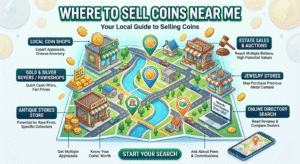
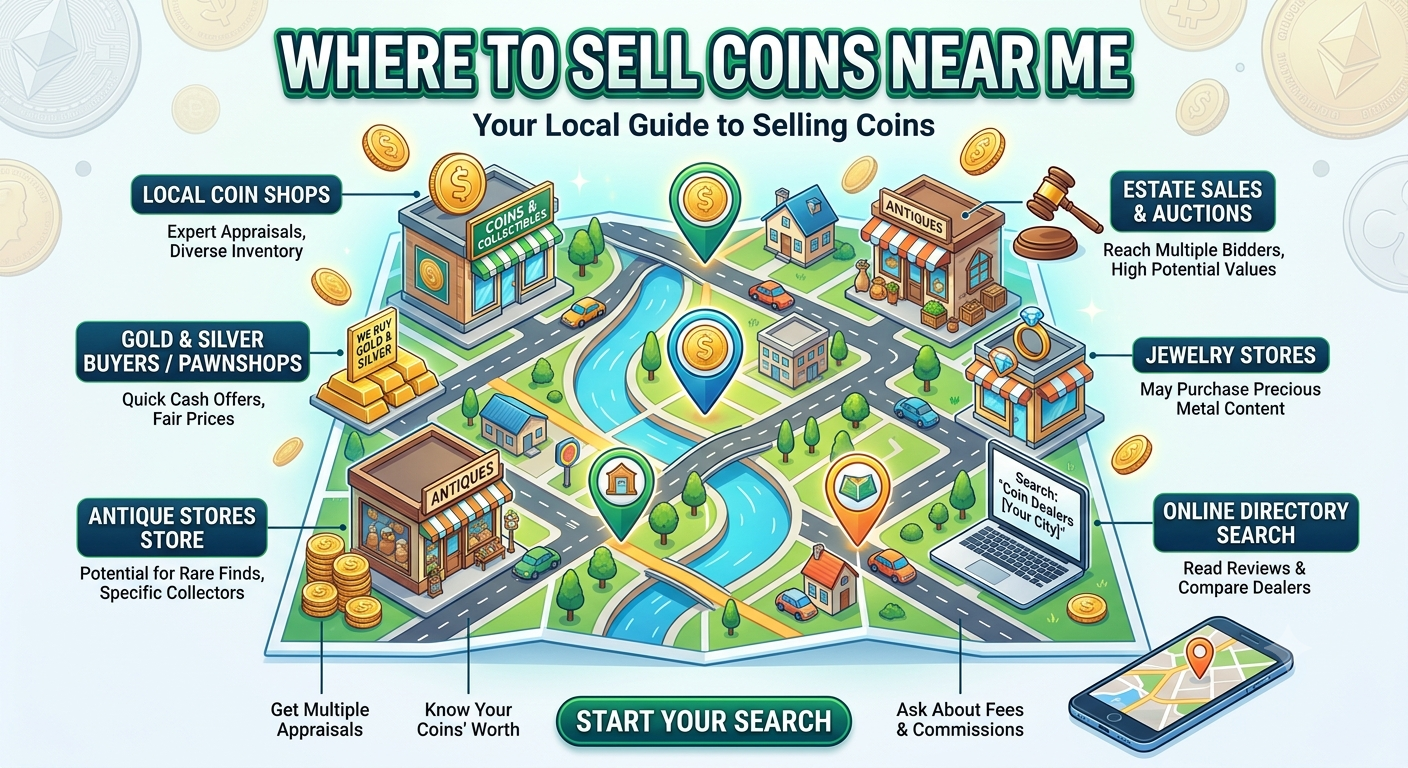
Once you understand your collection and have researched its approximate value, the next step is finding the right buyer. Many people immediately search for where to sell coins near me because they want a safe, convenient, and reliable transaction. Fortunately, there are several options available, each offering unique advantages depending on the type of coins you own and your selling goals.
The ideal selling location depends on factors such as the rarity of your coins, their condition, current market demand, and how quickly you need payment. Some buyers specialize in collectible coins, while others focus mainly on precious metals. Taking the time to compare different options can help you receive a much better offer than accepting the first price presented.
Local Coin Shops
Local coin shops remain one of the most trusted places for buying and selling coins. These businesses are operated by experienced numismatists who evaluate collections based on rarity, condition, historical importance, and current market demand. If your search begins with where to sell coins near me, local coin dealers are often the first recommendation because they combine expertise with convenience.
One of the biggest advantages of visiting a local coin shop is receiving a professional evaluation in person. You can ask questions about your collection, understand why certain coins are more valuable than others, and negotiate directly with someone who understands the market.
Established coin shops often have long-standing reputations within the collecting community. They regularly purchase collections from estates, individual collectors, and investors, making them well-equipped to handle everything from common circulation coins to museum-quality rarities.
However, it is wise to visit multiple dealers before accepting an offer. Each dealer serves a different customer base, and their buying priorities may vary. One dealer may specialize in gold bullion, while another focuses on rare historical coins. Comparing offers gives you greater confidence that you are receiving fair market value.
Professional Coin Dealers
Professional coin dealers differ slightly from general coin shops because they frequently specialize in high-value collectibles and certified coins. Many belong to respected industry organizations and follow strict ethical standards when evaluating collections.
Experienced dealers carefully examine every detail, including mint marks, strike quality, surface preservation, rarity, and grading. They often maintain extensive networks of collectors who are actively seeking specific coins, allowing them to pay competitive prices for desirable pieces.
Working with an experienced dealer also reduces the risk of misidentifying valuable coins. A seemingly ordinary coin may actually represent a rare variety worth significantly more than its face value. Professional expertise helps ensure that hidden value is not overlooked.
Many dealers also provide appraisal services, allowing sellers to obtain written valuations before deciding whether to sell immediately or explore other options.
Coin Shows and Collector Events
Coin shows offer a unique selling opportunity because they bring together numerous dealers and collectors under one roof. Instead of visiting individual businesses across your city, sellers can receive multiple evaluations during a single event.
These gatherings attract specialists with expertise in different categories of coins, including ancient coins, world coins, commemorative issues, gold bullion, silver dollars, and rare mint errors. This diversity increases the likelihood of finding a buyer specifically interested in your collection.
Competitive bidding is another advantage. Multiple dealers may express interest in the same coins, encouraging stronger offers than you might receive during a private appointment. Collectors attending the event may also purchase directly if they are searching for specific items.
Coin shows additionally provide educational opportunities. Sellers can attend seminars, observe grading demonstrations, and learn about current market trends while networking with experienced professionals.
Auction Houses
Rare and exceptionally valuable coins often achieve their highest prices through specialized auction houses. Rather than negotiating with a single buyer, auction sales expose coins to hundreds or even thousands of potential bidders worldwide.
Collectors competing against one another frequently drive prices higher, particularly for scarce coins with strong historical significance. Auction houses also invest heavily in professional photography, marketing, catalog production, and buyer outreach, ensuring that important collections receive maximum visibility.
This selling method is particularly beneficial for coins with established collector demand or certified high grades. However, auctions require patience. Sellers may wait several weeks or months before the event takes place, and commission fees reduce the final payment.
Despite these considerations, auctions remain one of the strongest options for premium collections where achieving the highest possible selling price outweighs the need for immediate payment.
Precious Metal Buyers
Many coins derive much of their value from their gold, silver, platinum, or palladium content. Precious metal buyers specialize in evaluating bullion coins and scrap precious metals according to current commodity prices.
If your collection consists primarily of modern investment coins rather than collectible rarities, these businesses may provide competitive offers based on daily market rates.
Examples include gold bullion coins, silver rounds, investment-grade bars, and common precious metal coins with limited numismatic value.
Before selling to a precious metal buyer, verify whether your coins possess collectible value beyond their metal content. Some rare gold and silver coins are worth far more than their melt value due to scarcity and collector demand.
Pawn Shops
Pawn shops offer convenience and immediate payment, making them attractive for individuals who need cash quickly. Many pawn shops purchase gold and silver coins, as well as selected collectible pieces.
However, pawn shops generally purchase a wide variety of items rather than specializing exclusively in coins. As a result, their expertise may not match that of dedicated coin dealers. Offers sometimes reflect the precious metal content rather than the collectible value of rare coins.
Pawn shops can still serve as a practical option for common bullion coins or lower-value collections, especially when speed is more important than maximizing profit.
Comparing their offer with those from professional coin dealers is strongly recommended before completing the sale.
Online Coin Buyers
The growth of online commerce has transformed the coin market. Many reputable companies now purchase collections through insured mail-in programs, allowing sellers to reach national buyers without leaving home.
These businesses typically provide detailed instructions for securely packaging coins, arranging insured shipping, and receiving professional evaluations.
Online buyers often have access to larger customer bases than local businesses, enabling them to pay competitive prices for desirable material. Many publish transparent buying policies and explain how they calculate offers.
Before shipping valuable collections, always research company reviews, verify insurance coverage, and understand return policies if you decline an offer.
Selling Coins Through Online Marketplaces
Online marketplaces provide another excellent option for people researching where to sell coins near me, especially if local buyers are limited or if your coins appeal to a global audience.
Unlike direct sales to dealers, online marketplaces allow sellers to list coins individually and set their own asking prices. This creates opportunities to earn higher profits, particularly when collectors compete for rare items.
Successful online selling requires accurate descriptions, high-quality photographs, honest condition assessments, and secure shipping practices. Buyers expect detailed information about mint marks, grading, weight, certification, and any visible imperfections.
Building a positive seller reputation also contributes to long-term success. Prompt communication, careful packaging, and transparent policies encourage favorable reviews that attract future buyers.
Although online selling often requires more effort than local transactions, the larger audience can produce significantly better financial results for desirable coins.
Should You Sell Individual Coins or Entire Collections?
Many sellers inherit complete collections and wonder whether selling everything together is the best approach. The answer depends largely on the collection itself.
Individual sales often generate higher overall returns because rare or highly desirable coins receive focused attention from collectors. Buyers interested in completing specific sets may willingly pay premiums for individual pieces.
On the other hand, selling an entire collection offers convenience. Estate executors, families, and collectors reducing their holdings frequently prefer a single transaction rather than managing dozens or hundreds of individual sales.
Professional dealers usually evaluate the collection as a whole while considering standout pieces separately. If the collection contains several exceptional coins, requesting individual valuations helps ensure they are not undervalued within the larger group.
How Coin Grading Affects Selling Price
Professional grading has become one of the most influential factors in modern coin collecting. Independent grading organizations evaluate coins according to standardized criteria, assigning grades that communicate condition consistently across the marketplace.
Certified coins generally inspire greater buyer confidence because authenticity and condition have already been verified by experts. This reduces uncertainty and often results in stronger offers.
Coins in exceptional condition can sell for dramatically higher prices than similar examples showing moderate wear. Even a small difference in grade may represent hundreds or thousands of dollars depending on rarity.
Before investing in professional grading, consider the estimated value of the coin. Certification fees may not be worthwhile for inexpensive coins, but they can significantly increase marketability for rare and valuable pieces.
Tips for Negotiating the Best Price
Negotiation is a normal part of the coin-selling process. Buyers expect informed sellers to ask questions, compare offers, and discuss pricing respectfully.
Begin by researching recent sales of similar coins. Auction records, collector forums, and published price guides provide useful benchmarks that strengthen your negotiating position.
Avoid revealing that you are in a hurry to sell. Buyers may assume you are more likely to accept lower offers if they believe immediate payment is your highest priority.
Present your collection in an organized manner with any available certificates, grading reports, and original packaging. Professional presentation demonstrates careful ownership and encourages buyer confidence.
If multiple buyers express interest, politely mention that you are comparing offers. Healthy competition often results in improved pricing.
Finally, remember that the highest initial offer is not always the best overall deal. Consider payment methods, reputation, transaction security, and after-sale support before making your final decision.
Signs of a Trustworthy Coin Buyer
Choosing the right buyer is just as important as understanding the value of your coins. A reputable buyer should communicate openly, answer questions honestly, and explain how they determine pricing.
Look for businesses with years of industry experience, positive customer reviews, transparent buying policies, and professional memberships. Established dealers typically welcome questions and encourage sellers to seek second opinions rather than pressuring them into immediate decisions.
Reliable buyers also use recognized grading standards, provide detailed evaluations, and respect the seller’s right to decline an offer.
Be cautious of buyers who refuse to explain valuations, discourage comparisons, or insist on rushed decisions. Transparency and professionalism remain essential indicators of trustworthiness.
Whether you ultimately choose a local dealer, auction house, online marketplace, or collector event, careful research and patience will help you identify the option that best matches your collection and financial goals. Understanding these selling channels allows you to approach the process with confidence and greatly improves your chances of receiving the best possible return.