

Few questions get typed into a phone as often and as urgently, as “where can I get flowers near me.” It might be typed at midnight before an anniversary, in a parking lot on the way to a hospital, or in a quiet moment while planning a wedding. Whatever the occasion, the need is almost always immediate, emotional, and local. This guide takes a deep, honest look at everything behind that simple search query: how local flower shopping has evolved, why location matters so much in the results you see, what kinds of flower providers exist near you, how regional and state-level differences shape availability, and what the floral industry’s economic and social footprint really looks like. By the end, you will not just know where to get flowers near you — you will understand the entire ecosystem behind that search.
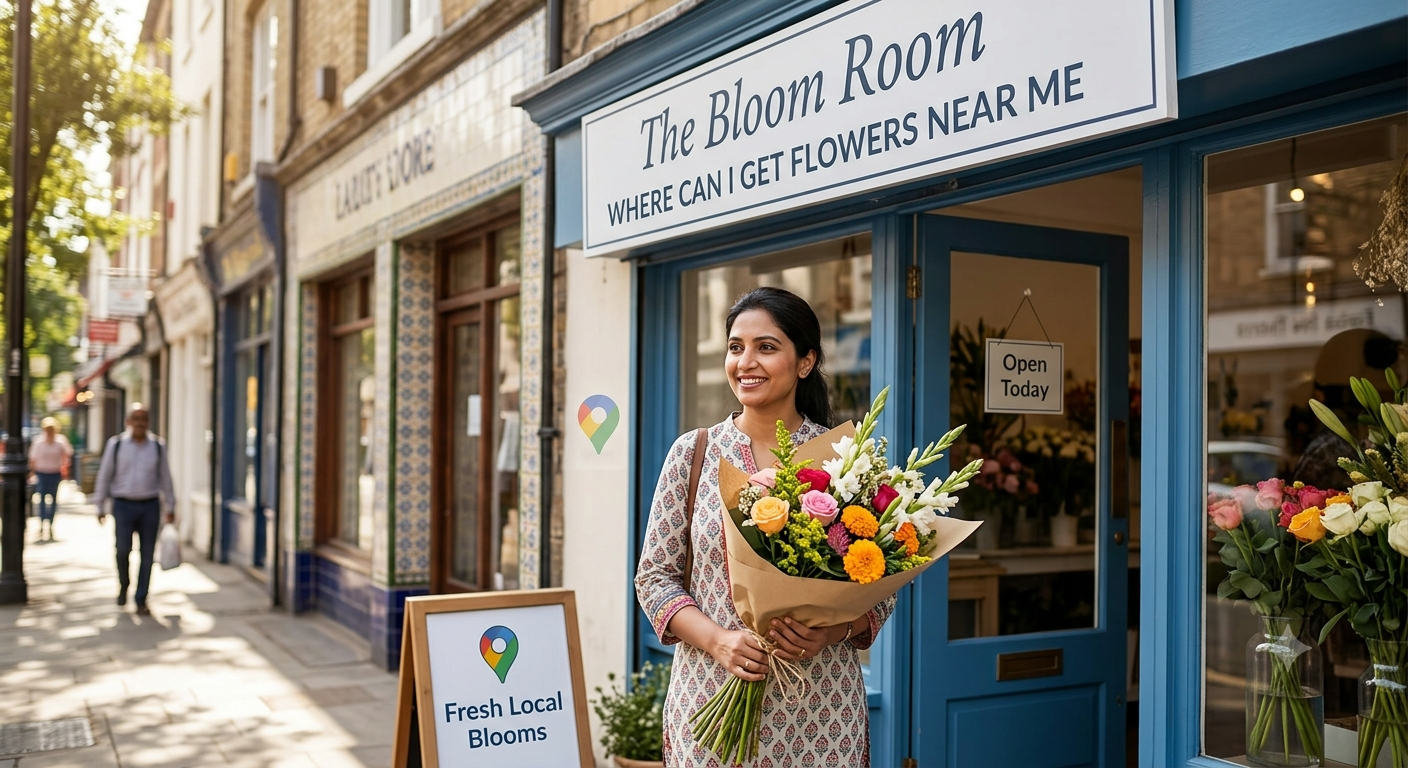
The Growing Search for “Where Can I Get Flowers Near Me”
Search engines process this exact phrase, along with dozens of close variations, millions of times every month. People rarely search generically for “buy flowers online” anymore; instead, they search with intent tied to their own street, neighborhood, or city. This shift reflects a broader change in consumer behavior. Shoppers want speed, proximity, and trust, and they want it delivered to a screen in seconds. When someone types where can I get flowers near me, they are not just asking a directions question — they are asking a trust question. They want to know which shop is closest, which one is open right now, which one has good reviews, and which one can get a bouquet into someone’s hands before the day ends.
This is precisely why local intent searches like flowers near me carry such commercial weight for florists, grocery chains, and delivery apps alike. A person asking where can I get flowers near me is typically ready to buy within the hour, not browsing for inspiration. That urgency changes everything about how businesses market themselves, how search engines rank results, and how the floral supply chain is structured behind the scenes to meet last-minute demand.
A Brief History of Local Flower Shopping
From Flower Markets to Digital Storefronts
Long before anyone could search where can I get flowers near me on a smartphone, flowers were sold almost exclusively through open-air markets, roadside stalls, and small neighborhood shops that sourced blooms from nearby farms. In many regions, flower selling was one of the earliest forms of small, independent retail, often run out of family homes or tiny storefronts passed down through generations. Weekly markets in towns and cities became social hubs where flower vendors built personal relationships with regular customers, remembering birthdays, anniversaries, and family losses without needing a database.
The twentieth century brought telegraph and telephone flower delivery services, which allowed people to send flowers across cities and even countries without visiting a shop in person. This was the first real disruption to purely local flower buying, and it planted the seed for what would eventually become online flower delivery. By the late 1990s and early 2000s, the internet transformed the industry again. Websites allowed customers to browse arrangements, compare prices, and schedule delivery from their desktop computers. Still, the experience remained somewhat impersonal compared to walking into a local shop and choosing blooms in person.
The real turning point came with the rise of smartphones and GPS-enabled search. Suddenly, a person did not need to remember a florist’s name or phone number; they simply needed to ask where can I get flowers near me, and a ranked list of nearby options appeared instantly, complete with reviews, photos, hours, and directions. This merging of physical proximity with digital convenience is the foundation of how local flower shopping works today.
Why Location Matters When You Search “Flowers Near Me”
How Local Search Algorithms Work
When someone searches flowers near me or the longer phrase where can I get flowers near me, search engines rely on a combination of signals to decide what to show. Your device’s location, the business’s registered address, the accuracy and completeness of its online listing, customer reviews, and even how recently the listing was updated all play a role. A florist with a well-optimized local business profile, consistent contact details across the web, and a steady stream of positive reviews tends to outrank a competitor who simply has a nice website but weak local signals.
This is why smaller, independent florists can often compete surprisingly well against large national chains for local searches. Proximity and relevance frequently outweigh brand size. A shop three streets away with strong reviews and accurate hours will often appear above a much bigger company located twenty minutes further away. This levels the playing field considerably and explains why local search optimization has become such a critical part of running a flower business, regardless of how small it is.
Types of Flower Providers You Can Choose From
Independent Local Florists
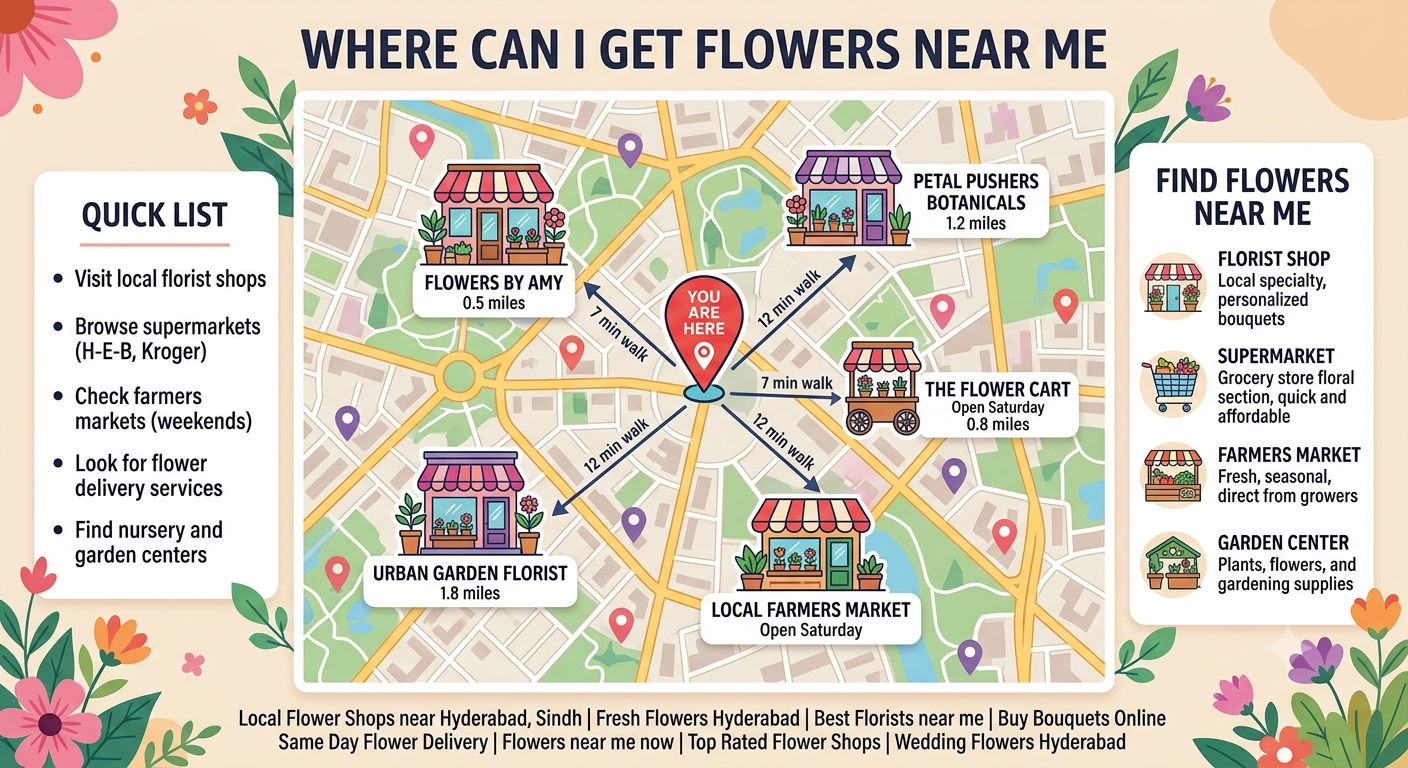
Independent florists remain the backbone of the industry in most cities and towns. These are the shops that show up first when people search where can I get flowers near me, particularly for same-day needs. Independent florists typically offer hand-arranged bouquets, custom orders for weddings and funerals, and the kind of personal service that larger chains struggle to replicate. Many source at least a portion of their stock from regional growers, which supports local agriculture and often results in fresher blooms than mass-shipped alternatives.
Supermarket and Grocery Store Flower Sections
Grocery stores and large supermarkets have become one of the most common answers to where can I get flowers near me, simply because of their sheer number and extended hours. These flower sections are convenient for last-minute, budget-friendly purchases, though the selection is usually more limited and less customizable than what a dedicated florist offers. For quick grab-and-go bouquets, however, they remain extremely popular, especially in suburban and rural areas where a specialty florist might not be within easy reach.
Online Flower Delivery Services
Digital-first flower delivery platforms have grown substantially, offering same-day or next-day delivery by connecting orders to a network of local florists or centralized fulfillment centers. When someone searches where can I get flowers near me on one of these platforms, the app typically routes the order to the nearest partner florist, blending the convenience of online ordering with the freshness of local sourcing. This hybrid model has become one of the fastest-growing segments of the floral industry.
Flower Farms and Rural Growers
In many regions, flower farms located on the outskirts of cities or in rural districts sell directly to the public, either through farm-stand outlets, seasonal markets, or partnerships with local shops. These growers play an outsized role in rural development, since flower cultivation can be more profitable per acre than many traditional crops, providing steady income to farming communities. Buying from these sources, even indirectly through a local florist, channels money back into rural economies and supports agricultural diversification.
Regional and State-Wise Availability of Flowers
The honest answer to where can I get flowers near me often depends heavily on where “near me” actually is. In dense urban centers, the search typically returns dozens of options within a mile, ranging from boutique florists to grocery chains to florist-delivery hybrids. In smaller towns or rural counties, the same search might return only two or three results, sometimes stretching several miles outside town limits.
Climate and regional growing conditions also shape what is available locally at any given time of year. Areas with strong horticultural industries tend to have more robust networks of local florists and growers, while regions with harsher climates may rely more heavily on flowers shipped in from warmer growing zones or imported internationally. This regional variation means that the freshest, most seasonally appropriate answer to where can I get flowers near me can differ significantly depending on the state, province, or country a person lives in. Some states have cultivated strong reputations for particular flowers thanks to favorable soil and climate, and local florists in those regions often highlight this provenance as a selling point, emphasizing shorter supply chains and fresher stock compared to shipped-in alternatives.
Economic and Social Impact of Local Flower Businesses
Supporting Rural Development Through Flower Farming
Flower cultivation has become an important contributor to rural development in many parts of the world, offering smallholder farmers a viable alternative or supplement to traditional food crops. Because ornamental flowers often command higher per-acre returns, they can generate meaningful income even on relatively small plots of land. Cooperative farming models, where groups of rural growers pool resources to reach larger markets, have allowed flower cultivation to become a genuine engine of rural economic activity, creating jobs not only in growing but in packing, transport, and local distribution as well.
Women-Led Floral Businesses and Empowerment
The floral retail sector has long been one of the more accessible small-business paths for women entrepreneurs, requiring relatively modest startup capital compared to many other retail categories. A significant share of independent flower shops around the world are owned and operated by women, and floral cooperatives in rural growing regions frequently provide women with steady, flexible income opportunities. This pattern reflects a broader trend of small-scale retail and agriculture serving as an entry point for women’s economic participation, particularly in communities where formal employment opportunities may otherwise be limited.
Community and Social Welfare Contributions
Beyond pure commerce, local flower businesses frequently participate in community welfare efforts, from donating unsold or surplus flowers to hospitals, hospices, and nursing homes, to sponsoring blooms for community events and memorials at reduced or no cost. Many florists also partner with local charities during holidays to provide flowers to families who could not otherwise afford them. These small but consistent acts of goodwill deepen the relationship between a florist and its neighborhood, which in turn reinforces why local, community-rooted shops so often outperform distant competitors when someone searches where can I get flowers near me.
The Policy and Regulatory Framework Behind Florists
Running a flower business, whether a single storefront or a large distribution operation, involves navigating a fairly specific regulatory framework. This typically includes standard small-business licensing, health and safety compliance for any shop selling perishable goods, and, for businesses that import flowers internationally, adherence to agricultural inspection and phytosanitary requirements designed to prevent the spread of pests and plant diseases across borders. Many regions also have zoning rules that affect where a flower shop can operate, particularly if it includes a storefront with public foot traffic.
For growers, agricultural policy can directly shape what flowers are available locally. Subsidies or support programs for horticultural farming, water usage regulations, and land-use policy all influence how much locally grown stock reaches nearby florists versus how much needs to be imported from other regions. Understanding this backdrop helps explain why flower prices and availability can fluctuate seasonally and regionally, and why the freshest local answer to where can I get flowers near me sometimes shifts depending on the time of year.
Step-by-Step: How to Find the Best Flowers Near You
Finding the right answer to where can I get flowers near me does not have to be complicated, but a little strategy goes a long way toward getting fresher flowers at a fair price. Start by checking your phone’s map or search app with your location services enabled, since this ensures the results genuinely reflect nearby options rather than generic national listings. Once you have a shortlist, take a moment to read recent reviews rather than just the overall star rating, since reviews from the past few weeks tend to reflect current service quality far better than older ones. Calling the shop directly, even after browsing online, can also reveal same-day availability that isn’t always reflected accurately on a website or delivery app.
It also helps to think about timing. Searching where can I get flowers near me first thing in the morning generally gives florists more time to prepare a custom arrangement, while late-evening searches may limit you to grocery store options or 24-hour delivery services. If the occasion allows any flexibility, ordering a day in advance from an independent florist almost always results in a fresher, more thoughtfully arranged bouquet than a last-minute grab. Finally, comparing a couple of options rather than clicking the very first result tends to pay off, since pricing and quality can vary more than people expect even among shops located just a few blocks apart.
Success Stories: Local Florists Thriving in the Digital Age
Across countless cities and small towns, independent florists have used local search optimization to transform modest neighborhood shops into thriving businesses. A common pattern among these success stories involves owners who invested early in claiming and maintaining accurate online business listings, responded promptly to customer reviews, and posted regular photos of fresh arrangements. These efforts consistently pushed their shops toward the top of results when nearby customers searched where can I get flowers near me, often outperforming larger competitors with bigger advertising budgets simply because their local signals were stronger and more consistent.
Other florists have grown by forming partnerships with online delivery platforms, allowing them to fulfill orders placed digitally while still operating a small, community-focused storefront. This hybrid approach has allowed shops that once relied entirely on walk-in traffic to reach customers across an entire city, without losing the personal touch that originally built their local reputation. In rural areas, some flower farms have similarly expanded by opening small retail stands or partnering with nearby florists, turning what was once a purely wholesale operation into a recognizable local brand that shows up directly in nearby search results.
Comparing Local Florists vs Online Flower Delivery Apps
Choosing between an independent local florist and a larger online delivery app when you search where can I get flowers near me really comes down to priorities. Independent florists generally offer more personalized arrangements, greater flexibility for custom requests, and a stronger connection to the local community, but their hours and delivery radius may be more limited. Online delivery apps, by contrast, tend to offer broader coverage, more predictable pricing, and around-the-clock ordering, since they route requests to whichever partner florist is closest to the delivery address, but the arrangements can sometimes feel more standardized.
Price comparisons between the two are not always straightforward either, since delivery apps often include service and delivery fees on top of the listed bouquet price, while a local shop’s walk-in or phone price is usually all-inclusive. For urgent, highly personal occasions such as sympathy arrangements or anniversaries, many people still prefer calling a local florist directly. For convenience-driven purchases, particularly when sending flowers to another city or when time zones make phone calls impractical, delivery apps tend to be the more practical choice. Increasingly, the smartest approach is not to pick one over the other permanently, but to match the method to the specific occasion.
Common Challenges in Getting Flowers Near You
Despite how easy modern search technology has made the process, there are still real challenges people run into when trying to answer where can I get flowers near me. Seasonal demand spikes, particularly around major holidays, can lead to sold-out inventory or inflated prices at even the most reliable local shops. Weather disruptions can delay flower shipments from growing regions, occasionally leaving florists with a narrower selection than usual. In more rural or remote areas, the pool of nearby options can be genuinely limited, sometimes forcing a choice between a long drive to a proper florist or settling for a smaller grocery store selection.
Inconsistent online listings present another persistent problem. A florist that has moved locations, changed its hours, or closed permanently but never updated its online profile can send frustrated customers on a wasted trip. This is part of why reading recent reviews and, when possible, calling ahead remains such a valuable habit, even in an age of instant digital search. Finally, price transparency can be inconsistent, particularly with third-party delivery platforms, where the final checkout total sometimes differs noticeably from the advertised bouquet price once service and delivery charges are added.
Future of Local Flower Shopping
The future of answering where can I get flowers near me is likely to be shaped by continued integration between hyper-local delivery logistics and increasingly sophisticated search technology. Same-day and even one-hour delivery windows are becoming more common as delivery networks mature, and some platforms are experimenting with real-time inventory syncing, so customers can see exactly which arrangements a nearby florist has in stock before ordering, rather than choosing from a generic catalog.
Sustainability is also becoming a bigger factor in how people choose where to buy. A growing number of shoppers actively look for florists who source from regional or domestic growers rather than flowers flown in from distant countries, both to reduce environmental impact and to support local and rural agricultural economies. This trend is likely to strengthen the position of independent, locally sourced florists in search results, since many search platforms are beginning to highlight sustainability and local sourcing as relevant ranking signals. Voice search is another shift worth watching, as more people simply ask a smart speaker or virtual assistant where can I get flowers near me rather than typing the query, which places even greater importance on florists maintaining clear, accurate, and complete online information.
Conclusion
The question where can I get flowers near me is deceptively simple, but behind it sits a rich and constantly evolving ecosystem of independent florists, grocery retailers, delivery platforms, rural growers, and the regulatory and economic structures that support them all. Understanding how local search works, what different types of flower providers offer, and how regional availability can shift throughout the year puts you in a much stronger position to get exactly what you need, whether that is a hand-tied bouquet from a neighborhood shop or a same-day delivery arranged entirely through an app. As local search technology and sustainability expectations continue to evolve, the answer to that late-night, last-minute question is only going to get faster, fresher, and more personalized.