

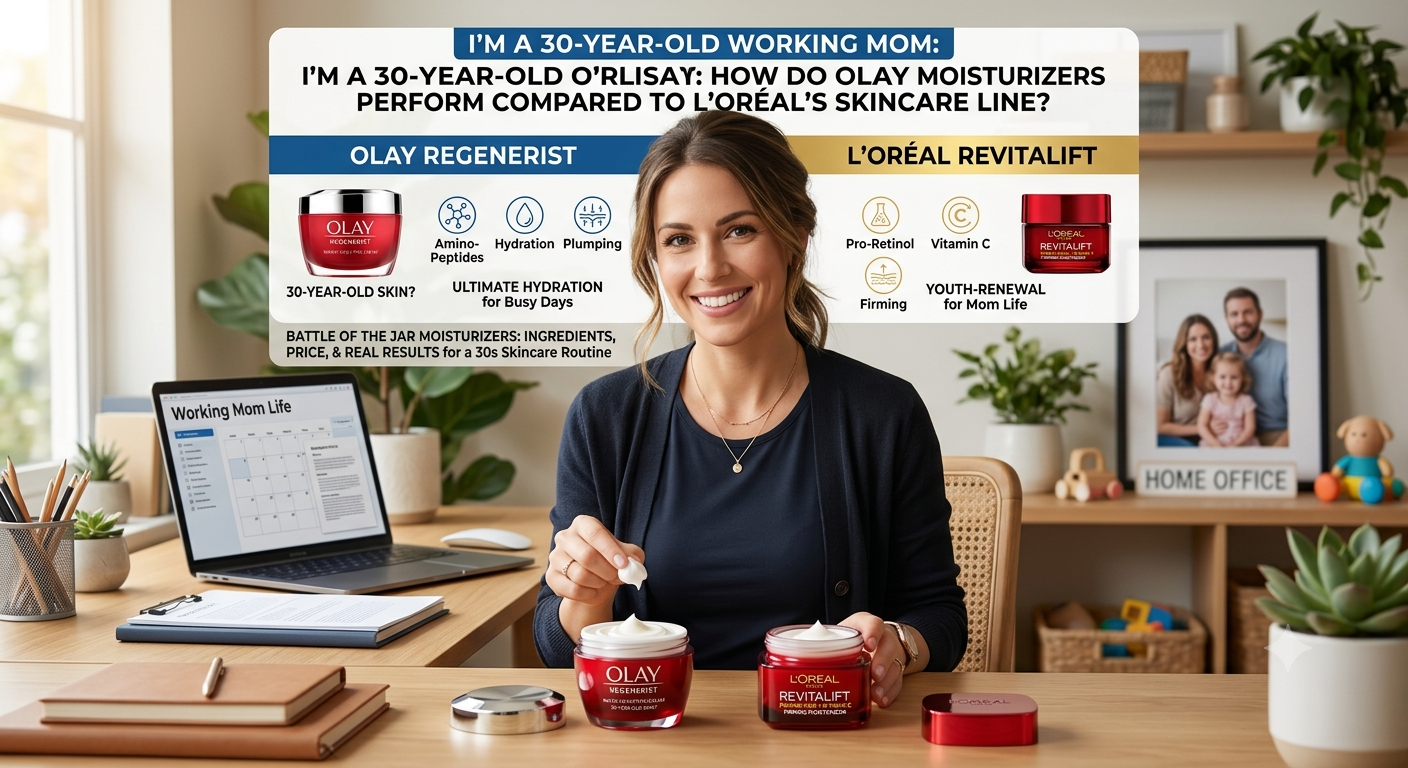
Turning thirty changes the way most women look at their skincare routine, and it changes even faster once you add a full-time job and a household of little ones into the mix. I’m a 30-year-old working mom, and if there’s one thing I’ve learned over the past few years, it’s that skincare has to be efficient, effective, and forgiving of a schedule that rarely goes as planned. Between school drop-offs, back-to-back meetings, and the general chaos of raising kids while holding down a career, there’s no time for an eight-step routine or a product that needs babying. What I need is something that works quietly in the background while I focus on everything else.
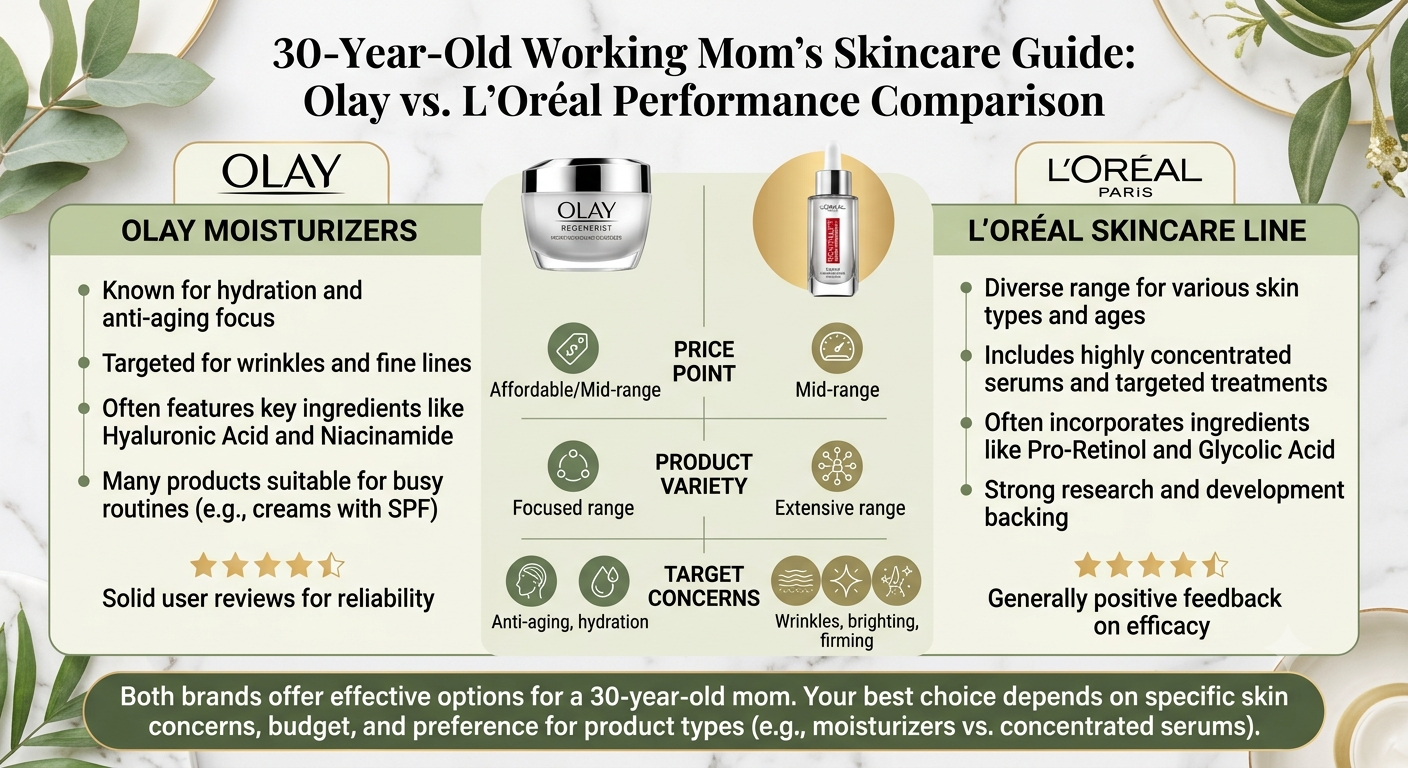
That search eventually led me to compare two of the biggest names on the drugstore shelf: Olay and L’Oréal. Both brands have been around for decades, both are backed by serious dermatological research, and both promise hydration, anti-aging benefits, and visible improvements in skin texture. But performance in real life, especially the tired, sun-exposed, stress-affected skin of a working mother, often looks very different from performance in a lab. This article is my honest, in-depth breakdown of how Olay moisturizers stack up against L’Oréal’s skincare line, based on ingredients, results, value for money, and what actually fits into the life of someone juggling a career and a household.
Why Skincare Priorities Shift for a Working Mom in Her 30s
Before diving into the comparison, it’s worth understanding why this question matters so much at this particular life stage. In your twenties, skin tends to bounce back quickly from late nights, poor sleep, and the occasional skipped skincare step. By thirty, especially when you’re also managing the physical and emotional demands of parenting alongside a job, the skin starts sending different signals. Fine lines appear around the eyes, skin tone becomes uneven from years of sun exposure, and dehydration shows up faster because there’s simply less time to drink enough water or unwind at the end of the day.
For a working mom, the ideal moisturizer has to do more than just sit on the surface and feel nice. It needs to genuinely support the skin barrier, deliver hydration that lasts through a nine-hour workday, and offer some anti-aging benefit without requiring a complicated multi-product regimen. This is exactly the space where Olay and L’Oréal have spent years competing for attention, and it’s why so many women in similar situations end up asking the same question I did: which one actually delivers?
The Realities of a Time-Starved Routine
Anyone balancing a job and children will recognize this scenario: the alarm goes off, there’s a rush to get everyone fed and dressed, and skincare becomes a sixty-second afterthought squeezed in before leaving the house. Evenings aren’t much different, with dinner, homework, bath time, and bedtime routines eating into the hours that used to be reserved for a relaxed beauty ritual. This is precisely why the performance of a single, reliable moisturizer matters so much more than a ten-product regimen that looks great in a flat-lay photo but never actually gets used consistently.
A Brief History of Olay and L’Oréal in the Skincare World
Understanding where these two brands come from helps explain why they approach moisturizers so differently. Olay, originally launched in the 1950s as Oil of Olay, built its reputation on a single hero product: a pink, oil-based lotion that promised to keep skin soft and youthful. Over the decades, the brand evolved into a full skincare powerhouse, expanding into serums, night creams, and targeted treatments while staying rooted in accessible, dermatologist-friendly formulations. Its Regenerist and Total Effects ranges are especially popular among women in their thirties and forties looking for anti-aging support without a premium price tag.
L’Oréal, on the other hand, emerged from a hair-color company founded in the early 1900s in France and grew into one of the largest beauty conglomerates in the world. Its skincare division, particularly the Revitalift line, draws heavily on the brand’s research into retinol, hyaluronic acid, and vitamin C, positioning itself as a more laboratory-driven, ingredient-forward option. L’Oréal has long marketed itself around cutting-edge dermatological science, often citing partnerships with skin experts and clinical trial data to back up its claims.
Both brands, in other words, arrived at the same destination, effective, affordable, everyday skincare, but took very different roads to get there. That difference in philosophy still shows up clearly when you compare their moisturizers side by side today.
Comparing the Core Ingredients: What’s Actually in the Jar
As a working mom, I don’t have hours to research every ingredient list, but I’ve learned that a quick scan can tell you a lot about what a moisturizer is actually built to do.
Olay’s moisturizers, particularly in the Regenerist and Luminous lines, tend to lean on niacinamide, peptides, and hyaluronic acid. Niacinamide is especially useful for tired, stressed-out skin because it helps strengthen the skin barrier, calm redness, and even out tone over time. Peptides support collagen production, which becomes increasingly relevant once you hit your thirties, and hyaluronic acid pulls in moisture to keep skin looking plump rather than dull. Olay has also made a name for itself with its patented “amino-peptide complex,” a formulation the brand claims mimics the skin’s natural repair process.
L’Oréal’s Revitalift range, by comparison, is built around retinol, vitamin C, and hyaluronic acid as well, but with a stronger emphasis on active, fast-acting ingredients. Retinol in particular is a proven anti-aging ingredient that speeds up cell turnover and reduces the appearance of fine lines, though it can be more irritating for sensitive or reactive skin if not introduced gradually. L’Oréal also incorporates ceramides in several of its moisturizers, which help reinforce the skin’s protective barrier, an important feature for anyone whose skin is frequently exposed to air conditioning, screen time, and general daily stress.
In short, Olay tends to favor a gentler, more barrier-focused approach, while L’Oréal leans into more aggressive, results-driven actives. Neither approach is wrong, but the right choice depends heavily on your skin’s current condition and tolerance.
Texture, Absorption, and Everyday Wearability
Ingredients matter, but so does how a product actually feels and behaves on the skin during a busy day. Olay moisturizers, especially the Regenerist Micro-Sculpting Cream, have a rich, whipped texture that absorbs relatively quickly and layers well under makeup, which matters enormously when you’re applying skincare in the five minutes before rushing out the door. L’Oréal’s Revitalift creams tend to be slightly heavier and more emollient, which some users love for overnight hydration but which others find a bit much for a hot, humid morning before work.
For a working mom applying moisturizer in a rush and then immediately putting on foundation or heading into a car with kids in tow, that absorption speed can be the deciding factor. Olay generally wins this particular category for daytime use, while L’Oréal often performs better as a nighttime option when there’s no rush and the skin has hours to absorb a richer formula.
Hydration Performance: Which Brand Keeps Skin Moisturized Longer
Hydration is arguably the single most important factor for anyone asking how Olay moisturizers perform compared to L’Oréal’s skincare line, because dryness and dullness are usually the first visible signs of a hectic, sleep-deprived lifestyle. In my own experience and based on broader consumer feedback, Olay’s hyaluronic acid-based formulas tend to deliver noticeably plump, dewy skin within the first few uses, largely because the brand formulates its moisturizers to lock in moisture at multiple skin layers rather than just sitting on the surface.
L’Oréal’s moisturizers, particularly those in the Hydra Genius and Revitalift Hyaluronic Acid lines, also perform well on hydration, though the effect can feel slightly less immediate and more cumulative, building up better results over a few weeks of consistent use rather than overnight. For someone comparing short-term visible results, Olay often has the edge, while L’Oréal tends to reward patience with longer-term skin barrier improvements.
Skin Barrier Support Over Time
Because working moms are dealing with disrupted sleep, high stress hormones, and constant environmental exposure, from office air conditioning to outdoor school pickups, skin barrier health becomes just as important as surface hydration. Olay’s niacinamide-forward formulas do a solid job of calming and reinforcing this barrier, which is why many users report reduced redness and improved tone consistency over a few months. L’Oréal’s ceramide-infused creams take a more structural approach, essentially replenishing the lipids that make up the skin’s outer defense layer, which can be particularly helpful for anyone dealing with sensitivity, eczema-prone patches, or seasonal dryness.
Anti-Aging Results: Fine Lines, Firmness, and Overall Texture
This is where the two brands diverge most clearly. L’Oréal’s retinol-based Revitalift products are generally more aggressive anti-aging performers, producing visible improvements in fine lines and skin texture within four to six weeks for many users. Retinol is one of the most clinically validated anti-aging ingredients available, and L’Oréal has leaned into that reputation heavily in its marketing and formulation strategy.
Olay’s approach, built more around peptides and niacinamide, tends to produce slower but gentler results. Instead of a dramatic transformation, users typically notice a gradual improvement in firmness, tone, and overall radiance over two to three months. For a 30-year-old just starting to notice the earliest signs of aging, this slower, steadier approach can actually be preferable, since it reduces the risk of irritation while still delivering measurable improvement over time.
If your priority is fast, visible anti-aging results and your skin can tolerate more active ingredients, L’Oréal likely has the advantage. If you’re looking for a gentler introduction to anti-aging skincare that won’t cause redness or peeling in the middle of a hectic work week, Olay is generally the safer bet.
Sensitivity and Irritation Considerations
Retinol, while effective, is also one of the most common causes of irritation, especially for first-time users or for skin that’s already stressed from lack of sleep and constant multitasking. Several L’Oréal Revitalift products do include retinol at concentrations that can cause mild dryness, flaking, or sensitivity in the first two to three weeks of use, a real consideration for anyone who doesn’t have the luxury of a slow skincare “purge” period while also managing a job and kids. Olay’s gentler actives make it a more forgiving option for sensitive or reactive skin, and it’s generally easier to use daily without needing to build up tolerance gradually.
Price, Accessibility, and Value for Working Moms on a Budget
For most working mothers, budget is a real and constant factor, and both Olay and L’Oréal are positioned as accessible, mid-range skincare brands rather than luxury options. Generally speaking, Olay’s core moisturizers are priced slightly lower than L’Oréal’s equivalent Revitalift products, making Olay a strong entry point for anyone building a simple, effective routine without overspending. L’Oréal’s products sit a notch higher in price, though still well within drugstore range, and the brand often justifies this with its emphasis on clinically tested actives like retinol and vitamin C.
In terms of value, Olay tends to offer more product volume for the price, which matters when you’re using moisturizer twice a day, every day, often without much room in the monthly budget for splurging on skincare. L’Oréal’s slightly higher price point can feel more justified for users specifically seeking retinol-based anti-aging benefits, since that ingredient does carry more clinical backing for long-term results.
Availability and Convenience
Both brands are widely available at pharmacies, supermarkets, and online retailers, which is a genuine advantage for anyone doing a quick skincare restock during a weekly grocery run rather than making a separate trip to a specialty beauty store. This accessibility factor shouldn’t be underestimated for a working mom whose shopping time is often squeezed between errands, school activities, and the occasional five minutes of quiet in a parking lot.
Real-World Performance: What Working Moms Are Actually Saying
Beyond ingredient lists and marketing claims, real-world feedback from other busy mothers offers some of the most useful insight into how these products perform under actual daily conditions rather than ideal lab settings. Many women in their thirties managing careers and children report that Olay’s Regenerist line delivers consistent, low-maintenance hydration that holds up through long workdays, school runs, and everything in between, without requiring constant reapplication or careful layering.
Feedback on L’Oréal’s Revitalift line often highlights strong results for fine lines and firmness, particularly among users in their mid-thirties to forties who are further along in the aging process and want more noticeable anti-aging action. However, some working mothers report that the richer texture and retinol content make it better suited to a nighttime routine rather than something to rely on during a hectic morning before work.
Success Stories Worth Noting
Several long-term Olay users describe a gradual but meaningful shift in skin tone and texture after consistent use over several months, often noting that the product held up well even during particularly stressful or sleep-deprived stretches of parenting young children. On the L’Oréal side, users managing more visible signs of aging, deeper lines, looser skin texture, or pigmentation, frequently report that the brand’s retinol and vitamin C combination produced faster, more dramatic improvements, particularly when paired with consistent sunscreen use during the day.
Challenges and Common Complaints With Each Brand
No skincare line is without its drawbacks, and it’s worth being honest about where each brand tends to fall short. Olay’s gentler formulations, while excellent for sensitive skin, can feel too mild for anyone dealing with more advanced signs of aging or stubborn hyperpigmentation, since the results, while steady, are rarely dramatic. Some users also find that certain Olay moisturizers, especially in warmer climates, can feel slightly heavy or greasy under makeup if too much product is applied.
L’Oréal’s main challenge lies in its retinol-based products’ potential for irritation, particularly for first-time users or anyone with naturally sensitive or reactive skin. The adjustment period required before retinol becomes comfortable to use daily can be frustrating for a working mom who doesn’t have time to manage flaking or redness in between meetings and school pickups. Additionally, some users report that L’Oréal’s fragrance levels in certain products are stronger than expected, which can be a drawback for those with fragrance sensitivities.
Comparing Beyond Moisturizers: The Broader Skincare Ecosystem
While this article focuses specifically on moisturizers, it’s worth briefly touching on how each brand’s broader skincare ecosystem supports (or complicates) a working mom’s routine. Olay tends to design its products to work well as standalone solutions, meaning a single moisturizer can often deliver hydration, mild anti-aging benefits, and barrier support without needing a serum or additional treatment layered underneath. This “one and done” approach suits a minimal routine perfectly.
L’Oréal, by contrast, often markets its moisturizers as part of a broader system, encouraging users to pair the Revitalift moisturizer with a matching serum, eye cream, or cleanser for maximum results. While this can deliver more comprehensive results, it also demands more time, more products, and a bigger investment, three things that are often in short supply for a busy working parent.
Sunscreen and Daytime Protection
Both brands offer moisturizers with built-in SPF, which is a genuinely useful feature for working moms who don’t always have time for a separate sunscreen step before heading out the door. Olay’s SPF-infused day creams tend to feel lighter and more wearable under makeup, while L’Oréal’s SPF options, though effective, can feel slightly heavier, again reinforcing the pattern of Olay performing better for daytime, on-the-go use.
Future Prospects: Where Both Brands Are Headed
Looking ahead, both Olay and L’Oréal continue to invest heavily in research and reformulation, particularly around microbiome-friendly ingredients, sustainable packaging, and personalized skincare recommendations driven by AI and skin-scanning technology. Olay has been expanding its “Skin Advisor” tool, which uses photo analysis to recommend specific products based on individual skin concerns, a feature that could be especially useful for time-strapped moms who don’t have hours to research ingredients themselves.
L’Oréal, as one of the largest beauty companies in the world, continues to push forward with dermatological partnerships and next-generation retinoid formulations designed to reduce irritation while maintaining efficacy. Both companies appear to be moving toward smarter, more personalized skincare, which is a promising sign for anyone whose current routine is built on trial and error rather than a properly tailored plan.
Final Verdict: Which Should a Working Mom Actually Choose?
After comparing ingredients, texture, hydration performance, anti-aging results, price, and real-world feedback, there isn’t a single universal winner, because the right answer depends on your skin’s specific needs and how much time you realistically have for your routine. As a 30-year-old working mom myself, my honest takeaway is this: if your priority is a fast-absorbing, gentle, budget-friendly moisturizer that fits into a rushed morning routine without irritation, Olay is generally the stronger choice. If you’re further along in noticing fine lines, texture changes, or firmness loss and are willing to invest a little more time and money into a slightly richer, retinol-based formula for your nighttime routine, L’Oréal’s Revitalift line tends to deliver more noticeable anti-aging results.
Many working mothers, myself included, end up using a hybrid approach: an Olay moisturizer for daytime use because of its lightweight, fast-absorbing formula, paired with an L’Oréal retinol-based cream at night when there’s time for the product to fully absorb and work without interference from makeup or a rushed schedule. This combination approach lets you take advantage of what each brand does best, rather than forcing a single product to do everything.