


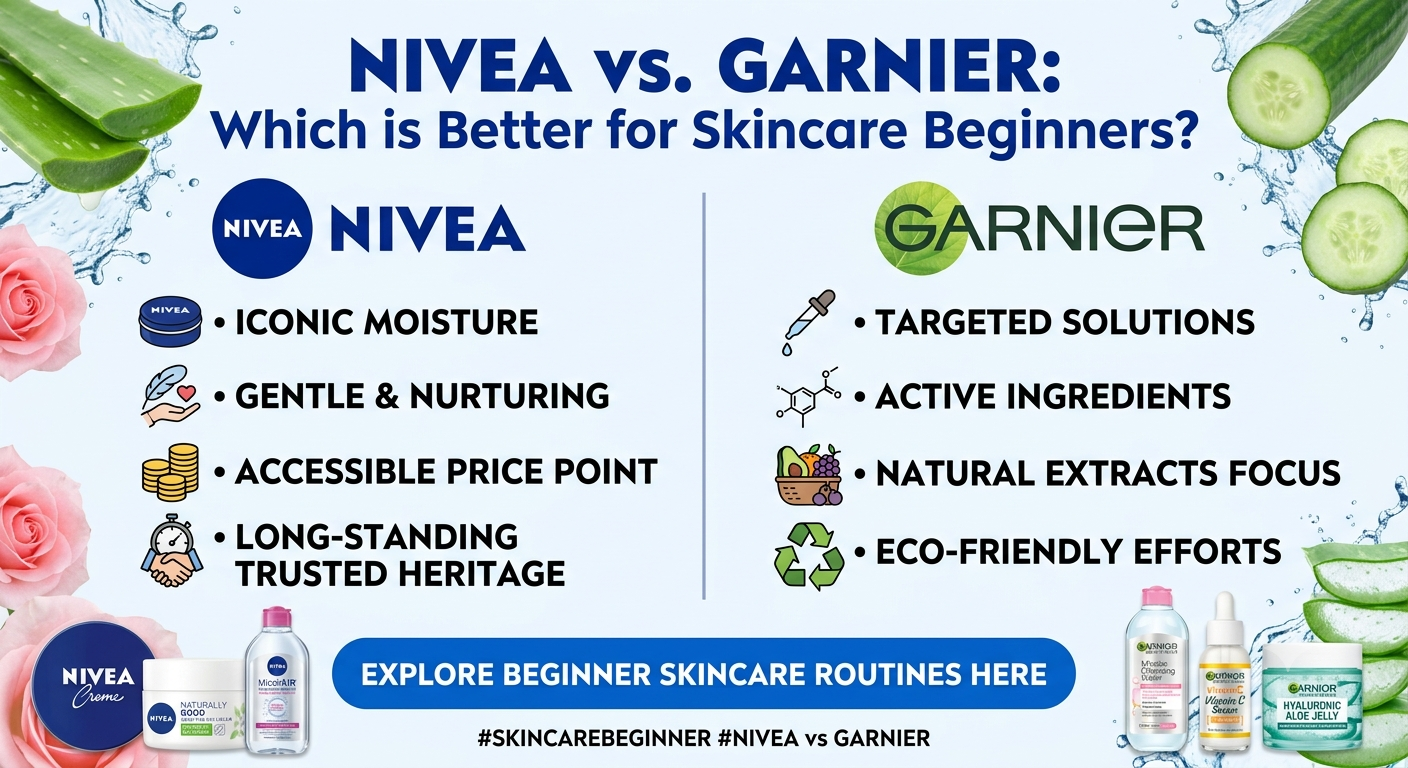
Starting a skincare routine for the first time can feel like walking into a supermarket aisle and being hit by a wall of jars, tubes, and serums that all promise glowing, flawless skin. If you’re a skincare beginner, chances are you’ve already typed the question into a search bar late at night: is Nivea a good starting brand compared to Garnier? It’s one of the most common dilemmas among people who are just stepping into the world of cleansers, moisturizers, and sunscreens, and for good reason. Both Nivea and Garnier are household names, sold in nearly every pharmacy, supermarket, and online store, and both have built decades of trust among everyday users. But when you’re new to skincare, the brand you choose first can shape how confident you feel about sticking with a routine at all.
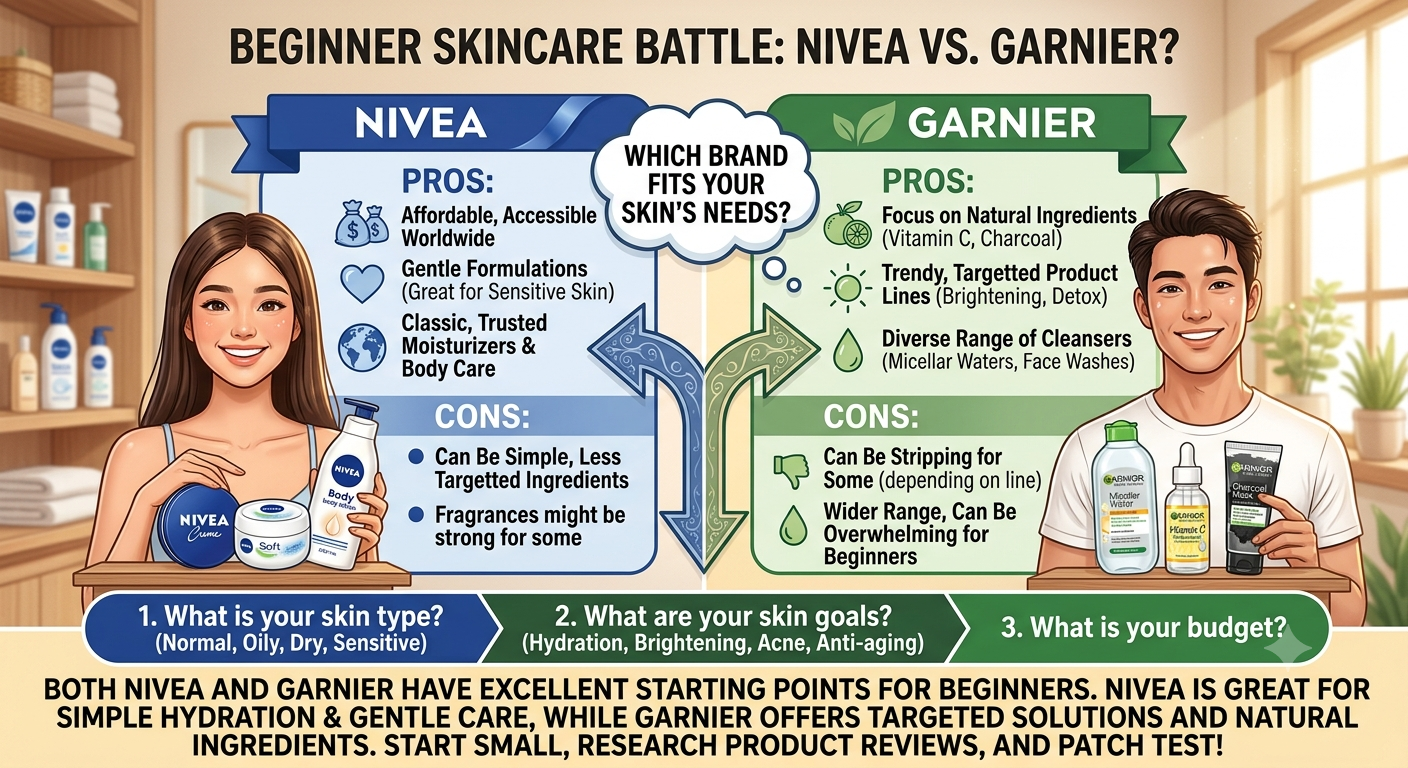
This article takes a deep, honest look at both brands, tracing their history, philosophy, product ranges, ingredient quality, affordability, and real-world performance, so that by the end you’ll have a clear, practical answer to whether Nivea is a good starting brand compared to Garnier, or whether your skin might actually do better with the other option, or even a blend of both.
Why This Question Matters So Much for Beginners
When someone is new to skincare, the stakes feel higher than they actually are. There’s a fear of breaking out, of wasting money, of picking the “wrong” product and undoing whatever natural balance your skin already has. This is exactly why beginners gravitate toward brands like Nivea and Garnier in the first place. They’re not niche, dermatologist-only labels sold in specialty boutiques. They’re accessible, affordable, and familiar, which lowers the psychological barrier to just getting started.
The comparison between Nivea and Garnier isn’t really about which brand is objectively superior in a laboratory sense. It’s about which one fits your skin type, your budget, your climate, and your patience for a multi-step routine. A skincare beginner needs simplicity and consistency far more than they need a fifteen-step Korean-style regimen, and both Nivea and Garnier, in their own ways, cater to that need for simplicity.
A Brief History of Nivea and Garnier
Understanding where these two brands come from helps explain why they formulate products the way they do today. Nivea was founded in Germany in 1911, making it one of the oldest continuously operating skincare brands in the world. Its very first product, the Nivea Creme, was revolutionary at the time because it used a stable water-in-oil emulsion, something that had never been achieved before in a commercial cream. That heritage of simple, dermatologically tested, mass-market skincare has stayed with the brand for over a century. Nivea has always leaned into a philosophy of gentle, functional care rather than trend-chasing innovation, which is part of why it still feels like a safe, no-nonsense choice for someone who is skincare-illiterate.
Garnier, on the other hand, was founded in France in 1904 as a hair care company before expanding into skincare and later becoming part of the L’Oréal Group. Garnier’s skincare line took shape more prominently from the 1990s onward, with a strong emphasis on natural ingredients, fruit extracts, and vitamin-infused formulas. Garnier has positioned itself as the brand for people who want a slightly more “active” approach to skincare, often marketing products around specific concerns like dark spots, dullness, or oil control, whereas Nivea has traditionally marketed around broader, everyday hydration and protection.
This historical difference in philosophy is actually the first clue in answering whether Nivea is a good starting brand compared to Garnier. Nivea tends to prioritize gentleness and universality, while Garnier tends to prioritize targeted results, sometimes at the cost of a slightly higher chance of irritation for very sensitive beginners.
Core Philosophy and Product Range: Nivea vs Garnier
When you look at the shelves of both brands, the difference in approach becomes visible almost immediately. Nivea’s range is built around a few pillars: basic moisturizing creams, gentle cleansing products, sun protection, and body care that has quietly become iconic, like the Nivea Soft Cream and the classic blue tin. Their facial range includes micellar water, light moisturizers, and a soap-free face wash line, most of which are formulated to be as neutral and non-reactive as possible.
Garnier’s product range is noticeably more segmented by concern. You’ll find their Vitamin C line for brightening, the Bright Complete range for dark spots and pigmentation, the Pure Active line for acne-prone and oily skin, and the SkinActive micellar water range, which has become extremely popular among first-time users purely because of how gentle and effective it is at removing makeup and daily grime.
For a true beginner who doesn’t yet know their skin type or specific concerns, Nivea’s simpler, less segmented approach can actually reduce decision fatigue. You’re less likely to accidentally pick an overly targeted, potent product that isn’t suited to your skin. Garnier, while excellent once you understand your skin’s needs, sometimes tempts beginners into picking a “brightening” or “acne-fighting” product before they’ve even confirmed that’s what their skin needs, which can lead to unnecessary irritation.
Ingredient Analysis for Beginners
Ingredients are where the Nivea versus Garnier conversation gets genuinely interesting, and where a skincare beginner should pay the closest attention. Nivea’s formulations, especially in their core moisturizing range, tend to rely on time-tested humectants and emollients like glycerin, panthenol, and light mineral oils. These ingredients have an extremely low likelihood of causing a reaction, which is exactly why dermatologists often recommend Nivea’s basic cream or its light moisturizers to patients who have just started treating sensitive or reactive skin.
Garnier’s formulations frequently include actives such as vitamin C derivatives, niacinamide, salicylic acid, and various fruit or plant extracts like lemon, green tea, or aloe vera. These ingredients can deliver more visible results faster, particularly for concerns like dullness, oiliness, or minor blemishes, but they also carry a slightly higher chance of causing sensitivity, especially vitamin C and salicylic acid-based products, if introduced too quickly or in the wrong concentration for a beginner’s unadjusted skin barrier.
This doesn’t mean Garnier is a “worse” brand. It simply means that if you are a total beginner who hasn’t yet built any tolerance to active ingredients, starting with Nivea’s gentler formulations may reduce your risk of an early bad experience that puts you off skincare altogether. Once your skin barrier is a little more resilient, transitioning into Garnier’s more active-forward products, such as their popular Vitamin C serum or the SkinActive micellar water, becomes a natural next step rather than a risky first one.
Skin Type Compatibility
Skin type is arguably the single biggest factor in deciding whether Nivea is a good starting brand compared to Garnier for your specific situation. If you have dry or normal skin, Nivea’s rich, emollient-based moisturizers tend to perform exceptionally well, providing long-lasting hydration without feeling greasy after a short absorption period. Its classic blue tin cream, while heavier, is often praised by beginners with very dry skin as a reliable overnight treatment for rough patches, elbows, and cracked heels, and its lighter facial moisturizers extend that same comfort to the face.
If you have oily or combination skin, Garnier’s lighter, gel-based, or micellar formulations often feel more comfortable day to day. Products like the Garnier SkinActive micellar water or the Pure Active range are formulated with oil control and pore-clarifying ingredients in mind, which can make them feel less heavy than some of Nivea’s creamier textures.
For sensitive or acne-prone skin, the answer becomes more nuanced. Nivea’s fragrance-free or minimally fragranced lines are generally safer for reactive skin, but Garnier’s salicylic acid-based products, when used correctly and gradually, can be more effective at managing breakouts over time. A cautious beginner with acne-prone skin might start with Nivea to establish a baseline routine of cleansing and moisturizing, then slowly introduce a single Garnier product targeting blemishes once their skin has adjusted to a consistent routine.
Price Point and Accessibility
One of the most practical reasons beginners default to Nivea or Garnier in the first place is price. Both brands are positioned in the affordable, mass-market segment, widely available in supermarkets, pharmacies, and online marketplaces across nearly every country. Generally speaking, Nivea’s core moisturizers and cleansers are priced slightly lower or on par with Garnier’s equivalent products, making it marginally more beginner-wallet-friendly if you’re testing the waters without wanting to commit financially.
Garnier’s targeted products, particularly the Vitamin C and Bright Complete lines, sometimes carry a small premium over their basic offerings because of the added active ingredients, but they remain significantly cheaper than premium or dermatologist-brand alternatives. For a beginner on a tight budget, this affordability from both brands means you can realistically build a full basic routine, cleanser, moisturizer, and sunscreen, for the price of a single product from a higher-end skincare line.
Accessibility also favors both brands almost equally. Whether you’re shopping in a local pharmacy, a big-box retailer, or an e-commerce platform, Nivea and Garnier products are almost always in stock, unlike niche or imported skincare brands that may require special ordering or long shipping times. This universal availability matters more than people realize, because a beginner is far more likely to stay consistent with a routine when repurchasing a product is simple and immediate.
Real User Experiences and Success Stories
Across skincare forums, beauty blogs, and everyday word-of-mouth recommendations, certain patterns emerge repeatedly. Many first-time skincare users report that Nivea’s Soft Cream or its basic moisturizing lotion became their “gateway” product, the one item that finally got them into a consistent morning and night routine without any irritation or breakouts. For people living in colder or drier climates, Nivea’s heavier creams are frequently credited with resolving years of flaky, tight-feeling skin that lighter products failed to fix.
On the Garnier side, the micellar water has become something of a modern skincare rite of passage. Countless beginners describe it as the first product that made them understand the difference between simply washing their face with soap and actually cleansing it properly, without stripping natural oils. Garnier’s Vitamin C range also has a strong following among users who wanted visible brightening results within a few weeks, something that basic moisturizers alone typically can’t deliver.
These real-world success stories suggest that Nivea tends to win the “safe, comfortable foundation” category, while Garnier tends to win the “visible, targeted improvement” category. For a true beginner, starting with Nivea to build that safe foundation, then layering in a single Garnier product once you understand your skin better, is a strategy that shows up again and again in genuine user testimonials.
Common Mistakes Beginners Make with Either Brand
A recurring issue among first-time skincare users is over-purchasing. Beginners often walk into a store, feel overwhelmed, and buy an entire line of products from one brand, layering five or six new items onto their skin within the same week. This is a mistake regardless of whether you choose Nivea or Garnier, because your skin has no way of telling you which product is responsible if a reaction occurs.
Another common mistake is skipping sunscreen entirely while focusing only on moisturizers or targeted serums. Both Nivea and Garnier offer sun protection products, and dermatologists consistently emphasize that sunscreen is the single most important step for beginners, more important than any brightening serum or anti-aging cream. Neglecting this step, especially when using Garnier’s active ingredients like vitamin C, which can increase photosensitivity, is a mistake that undermines the benefits of the rest of the routine.
A third mistake is expecting overnight results. Garnier’s marketing, in particular, often emphasizes visible results within a specific number of days, which can lead beginners to abandon a product too early if they don’t see dramatic change. Nivea’s more understated marketing sometimes protects beginners from this trap simply because expectations are set lower and more realistically from the start.
Challenges and Limitations of Both Brands
No brand is without its downsides, and being honest about these limitations is essential for anyone trying to decide between them. Nivea’s biggest limitation for beginners is that its formulations, while safe, can feel too basic for people who eventually want to address specific concerns like hyperpigmentation, acne scarring, or fine lines. Its product range, though reliable, doesn’t offer the same depth of targeted treatment options that more specialized brands provide.
Garnier’s biggest limitation is the opposite problem. Its active-ingredient-forward products, while effective, occasionally cause purging or mild irritation in beginners who introduce them too quickly or in combination with other new products. Additionally, some Garnier formulations include fragrance, which, while pleasant for most users, can be a mild irritant for those with genuinely reactive or eczema-prone skin.
Both brands also face the broader challenge that comes with being mass-market: formulations are designed to suit as wide a population as possible, which sometimes means they’re not as precisely tailored as a dermatologist-prescribed or custom-formulated product would be. For a beginner, this is rarely a dealbreaker, but it’s worth knowing as your skincare journey matures and your needs become more specific.
Comparing with Other Beginner-Friendly Brands
While the Nivea versus Garnier debate is common, it’s worth briefly placing both brands in the wider context of other affordable skincare options that beginners often consider, such as Cetaphil, Neutrogena, or Simple. Cetaphil is frequently recommended by dermatologists for extremely sensitive or compromised skin barriers, arguably even gentler than Nivea, but it typically costs more and offers a narrower range of products. Neutrogena sits somewhere between Nivea and Garnier in terms of formulation philosophy, offering both basic hydrating products and more targeted acne or brightening solutions, often at a slightly higher price point. Simple, true to its name, markets itself almost entirely around minimal ingredient lists and fragrance-free formulas, making it another strong contender for ultra-sensitive beginners.
When placed against these alternatives, Nivea holds its own as one of the most affordable and widely available “gentle foundation” brands, while Garnier remains one of the most accessible options for beginners who want a taste of active ingredients without paying premium prices. Neither brand is outclassed by these alternatives; they simply occupy a very practical, budget-conscious middle ground that suits the vast majority of first-time skincare users.
Building a Simple Beginner Routine with Nivea or Garnier
For someone asking whether Nivea is a good starting brand compared to Garnier, the most useful answer often isn’t “pick one,” but rather “here’s how to structure your first routine using either or both.” A sensible starting routine for a beginner looks something like this: a gentle cleanser in the morning and evening, a lightweight moisturizer suited to your skin type, and a broad-spectrum sunscreen every single morning, regardless of weather or season.
If you lean toward Nivea, you might start with their soap-free face wash, follow it with their light moisturizing cream or lotion depending on your skin type, and finish with a dedicated sunscreen, since Nivea’s daily creams aren’t always formulated with adequate SPF for sole reliance. If you lean toward Garnier, the SkinActive micellar water makes an excellent first cleansing step, paired with one of their lighter moisturizers, and their sunscreen or SPF-infused moisturizer line for daytime protection.
Many experienced skincare users eventually land on a hybrid routine, using Nivea for the moisturizing and comfort layer while incorporating a single Garnier active product, like their Vitamin C serum, once or twice a week to introduce gentle brightening without overwhelming the skin. This blended approach often represents the best of both worlds for someone who started as a complete beginner and is now ready to level up their routine slightly.
Future Prospects: What’s Next for Both Brands
Both Nivea and Garnier continue to invest in reformulating their products to meet rising consumer demand for cleaner ingredient lists, sustainable packaging, and dermatologically backed claims. Nivea has been steadily expanding its “sensitive” and “pH-balanced” sub-lines, signaling a clear intent to remain the go-to brand for cautious, beginner-friendly skincare. Garnier, backed by L’Oréal’s research capabilities, has been pushing further into biotechnology-derived ingredients and more sophisticated active formulations, aiming to compete more directly with mid-range specialty brands while keeping its mass-market pricing.
For beginners entering the skincare world in the coming years, this trajectory suggests that Nivea will likely remain the safer, simpler starting point, while Garnier will continue to be the natural “next step” brand for those ready to explore slightly more advanced formulations. This complementary evolution, rather than direct rivalry, is good news for skincare beginners, because it means you don’t necessarily have to choose one brand forever. You can start with whichever suits your immediate comfort level and gradually expand into the other as your confidence and knowledge grow.
Final Verdict: Is Nivea a Good Starting Brand Compared to Garnier?
After examining the history, philosophy, ingredients, price, and real-world performance of both brands, the honest answer is that Nivea is generally the safer, gentler starting brand for a true skincare beginner, particularly if you have dry, normal, or sensitive skin, or if you simply want to avoid the risk of irritation while you’re still learning the basics. Garnier, meanwhile, is an excellent starting brand if you already suspect specific concerns like oiliness, dullness, or early signs of pigmentation, and you’re comfortable introducing one active ingredient at a time.
Neither brand is objectively “better” in a universal sense. The right choice depends heavily on your skin type, your tolerance for active ingredients, your budget, and your personal patience for seeing results. What both brands share, and what makes them genuinely strong options for beginners, is consistent quality control, wide accessibility, and decades of trust from millions of everyday users. Starting your skincare journey with either Nivea or Garnier, or a thoughtful combination of both, is a reasonable, low-risk way to build the habits that will serve your skin well for years to come.