

If you’ve ever stood in the skincare aisle holding two tubs of moisturizer, silently asking yourself, “I have sensitive skin — how gentle are Nivea’s creams compared to Aveeno?”, you are far from alone. Sensitive skin is one of the most common — and most misunderstood — skin concerns today, affecting people of every age, climate, and skin type. It shows up as redness, tightness, stinging, flaking, or unpredictable breakouts whenever a new product, change in weather, or even a stressful week disrupts the skin’s delicate balance. Choosing the wrong moisturizer can turn an ordinary day into an uncomfortable one, which is exactly why the Nivea-versus-Aveeno debate keeps coming up in skincare forums, dermatology waiting rooms, and late-night Google searches.
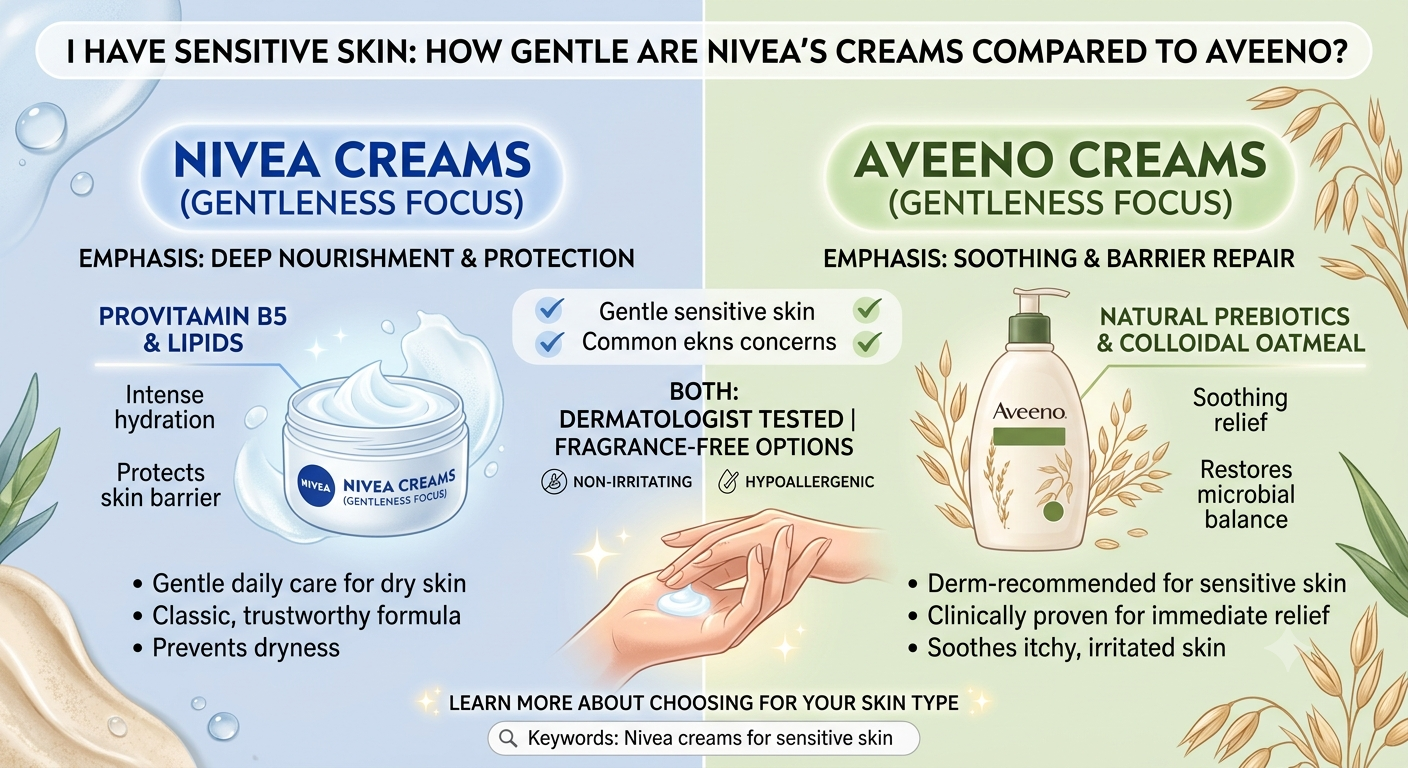
Both brands have built decades of trust, but they take noticeably different approaches to formulation, philosophy, and target audience. This article takes a deep, honest look at both brands — their history, their ingredient science, how they perform for different sensitive skin conditions, what real users and dermatologists say, and ultimately which one might deserve a permanent spot in your bathroom cabinet. Whether you’re dealing with everyday dryness, eczema-prone patches, rosacea flare-ups, or simply a face that reacts to almost everything, this guide is designed to answer the question once and for all.
Understanding Sensitive Skin Before Comparing Any Brand
Before diving into the Nivea-versus-Aveeno comparison, it helps to understand what “sensitive skin” actually means from a dermatological standpoint. Sensitive skin isn’t a single diagnosis; it’s an umbrella term describing a skin barrier that reacts more intensely than average to environmental triggers, active ingredients, fragrance, or even water temperature. The outermost layer of skin, known as the stratum corneum, acts like a brick wall — skin cells are the bricks, and lipids (fats) are the mortar holding everything together. When that mortar breaks down due to genetics, over-exfoliation, harsh weather, or aggressive products, moisture escapes and irritants enter more easily, resulting in the redness, itching, and discomfort so many people call “sensitive skin.”
This is precisely why the question “I have sensitive skin, how gentle are Nivea’s creams compared to Aveeno?” matters so much. A moisturizer isn’t just about hydration; it’s about repairing and protecting that barrier without introducing new triggers. The ingredients list, the fragrance load, the preservative system, and even the packaging (jar versus pump) all influence how a cream behaves on reactive skin. With that foundation in place, let’s look at where each brand comes from and how their core philosophies differ.
A Brief History of Nivea and Aveeno
Nivea was founded in Germany in 1911 and is widely credited with creating one of the world’s first stable oil-in-water emulsion creams, thanks to an emulsifier called Eucerit. That original blue tin — Nivea Creme — became a global icon and set the tone for the brand’s identity: rich, glycerin- and panthenol-based moisturizers designed for broad, everyday use across all skin types, including sensitive skin. Over more than a century, Nivea expanded into body lotions, face creams, sun care, and specialized sensitive-skin lines, but its DNA has always leaned toward classic, dermatologically tested formulas sold at accessible price points in nearly every country in the world.
Aveeno, on the other hand, was born in the United States in 1945, initially as an oatmeal bath treatment recommended by dermatologists for soothing irritated and eczema-prone skin. Its signature ingredient — colloidal oatmeal — remains at the heart of the brand today and has even received formal recognition from the U.S. Food and Drug Administration as a skin-protectant ingredient. Aveeno positioned itself early as a dermatologist-recommended, clinically studied brand built specifically around soothing compromised, itchy, and sensitive skin, rather than as a general-purpose moisturizer brand that happens to have sensitive-skin options.
This difference in origin story is the first clue to answering our central question. Nivea grew into sensitive-skin care as one branch of a broad beauty empire; Aveeno was built from its very first product around calming reactive skin. That doesn’t automatically make one better than the other, but it does shape how each brand formulates, markets, and tests its creams — something we’ll unpack in detail.
Ingredient Philosophy: What Actually Goes Into the Jar
When people ask how gentle Nivea’s creams are compared to Aveeno, what they’re really asking is: what’s in these formulas, and will it upset my skin? Let’s break down the core ingredient approach of each brand.
Nivea’s Core Formulation Approach
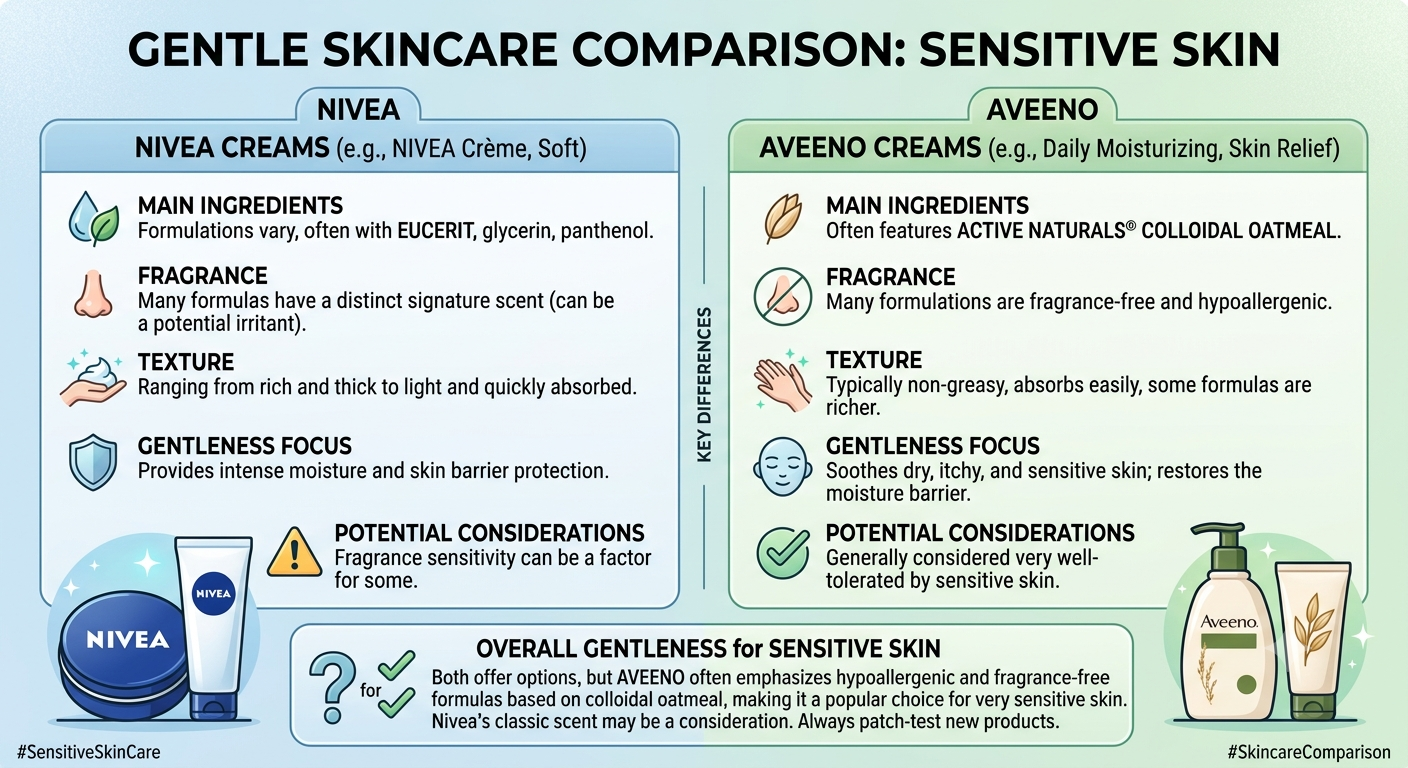
Nivea’s classic creams, including the well-known Nivea Creme and Nivea Soft, are built around a combination of glycerin, panthenol (pro-vitamin B5), and light mineral or plant-based oils suspended in a stable emulsion. Glycerin is a humectant, meaning it draws moisture into the skin, while panthenol has mild anti-inflammatory and hydrating properties that many people with dry or reactive skin tolerate well. Nivea also produces a dedicated “Nivea Sensitive” range formulated without added fragrance or with minimal fragrance, along with soothing ingredients such as chamomile and vitamin E in select products, aimed specifically at reducing the chance of irritation.
That said, several of Nivea’s mainstream products still contain added fragrance (parfum), mild preservatives, and, in some regional formulations, alcohol — all of which can be a concern for genuinely reactive or eczema-prone skin, even in small quantities. Nivea’s sensitive-labeled products are formulated to reduce these risks, but the brand’s broader lineup is designed more for general comfort and everyday hydration than for clinical-grade barrier repair.
Aveeno’s Core Formulation Approach
Aveeno’s hallmark ingredient, colloidal oatmeal, is finely milled oat that forms a protective, soothing film on the skin and has demonstrated anti-irritant and moisture-retaining properties in dermatological studies. Many Aveeno products, particularly the Daily Moisturizing and Skin Relief lines, pair this oat base with ceramides — lipid molecules that are naturally found in the skin barrier and are frequently depleted in people with eczema, sensitive skin, or dry skin conditions. Restoring ceramides is one of the most well-supported dermatological strategies for repairing a compromised skin barrier, which gives Aveeno a scientifically grounded edge for genuinely reactive skin.
Aveeno also tends to market its “Sensitive Skin” and “Baby Eczema Therapy” lines as fragrance-free (not just “unscented,” which can involve masking fragrances), hypoallergenic, and non-comedogenic, with formulations frequently tested under dermatologist and even pediatrician supervision. This clinical positioning is a major reason people specifically searching “I have sensitive skin, how gentle are Nivea’s creams compared to Aveeno?” often lean toward Aveeno if their skin issues go beyond ordinary dryness into eczema, rosacea, or diagnosed dermatitis.
Side-by-Side: How the Two Brands Compare in Practice
Now that we’ve covered the philosophy, let’s get practical. How do these creams actually perform when applied to real, sensitive skin day after day?
Texture and Absorption
Nivea’s classic creams tend to have a richer, slightly heavier texture, especially the original Nivea Creme, which many users describe as almost balm-like. This can feel wonderfully occlusive in cold, dry climates, sealing in moisture effectively, but it may feel too heavy for sensitive, acne-prone, or humid-climate skin. Nivea’s lighter lotions and sensitive-range products absorb faster and feel less greasy, making them more versatile for daytime use.
Aveeno’s formulas, particularly the Daily Moisturizing Lotion and Skin Relief line, are generally lighter and absorb more quickly, largely due to their gel-cream or lotion consistency rather than a dense cream base. For people whose sensitive skin also tends toward combination or oily patches, this lighter finish is often more comfortable and less likely to trigger congestion or breakouts.
Fragrance and Common Irritants
This is arguably the most important factor when evaluating how gentle Nivea’s creams are compared to Aveeno for truly reactive skin. Fragrance is one of the top causes of allergic contact dermatitis in skincare, and even “sensitive” labeled products can contain trace botanical extracts or masking agents that trigger a reaction in highly reactive individuals.
Nivea’s sensitive-labeled products reduce fragrance significantly compared to their standard lines, but shoppers should always check the specific product’s ingredient list, since formulations can vary by country and product type. Aveeno’s dedicated sensitive and eczema-focused products are more consistently formulated as truly fragrance-free across markets, which is a meaningful distinction for people whose skin reacts even to “light” scents.
Clinical Testing and Dermatologist Recommendations
Aveeno has invested heavily in clinical studies and dermatologist partnerships, and its products are frequently recommended in dermatology clinics for eczema, psoriasis-adjacent dryness, and post-procedure skin recovery. This doesn’t mean Nivea lacks credibility — Nivea products undergo dermatological testing as well, and many dermatologists do recommend Nivea’s sensitive range for everyday dryness — but Aveeno’s clinical positioning is more specifically built around compromised and reactive skin conditions, while Nivea’s testing supports broader, general-use safety and hydration claims.
Price and Accessibility
Nivea is widely available at a lower price point across nearly every country, including many regions where Aveeno either isn’t sold or is priced at a premium. For people managing sensitive skin on a tighter budget, Nivea’s affordability and global availability make it a genuinely practical choice, especially for maintaining daily hydration once the skin barrier is already stable.
Aveeno tends to sit at a mid-to-premium price point, reflecting its clinical formulation and colloidal oatmeal sourcing. For people dealing with active flare-ups, diagnosed eczema, or post-treatment sensitive skin, many find the extra cost worthwhile given the more targeted barrier-repair ingredients.
Which One Suits Different Types of Sensitive Skin?
Not all sensitive skin is the same, and the honest answer to “how gentle are Nivea’s creams compared to Aveeno” really depends on what’s causing your sensitivity in the first place.
Everyday Dryness and Mild Reactivity
If your skin is simply prone to dryness, tightness after washing, or occasional mild irritation from weather changes, Nivea’s sensitive range or classic Nivea Creme can work very well. The glycerin-and-panthenol base delivers reliable hydration, and the lower fragrance sensitive line reduces the risk of reactions for moderately sensitive users.
Eczema, Dermatitis, or Diagnosed Skin Barrier Conditions
If your sensitivity is tied to eczema, atopic dermatitis, or a formally diagnosed barrier condition, Aveeno’s colloidal oatmeal and ceramide-based formulas are generally the stronger choice. The anti-inflammatory properties of oat extract, combined with barrier-restoring lipids, are specifically suited to calming active flare-ups and reducing itch, which is why so many pediatricians and dermatologists reach for Aveeno first in these cases.
Rosacea-Prone or Redness-Sensitive Skin
For rosacea-prone skin, both brands’ fragrance-free lines can work, but patch testing is essential regardless of brand, since rosacea triggers vary enormously between individuals. Aveeno’s lighter, oat-based formulas tend to be slightly better tolerated for facial rosacea due to their calming profile, while Nivea’s richer body creams can still be excellent for rosacea-related dryness on the body, away from the face.
Sensitive Skin in Children or Infants
Aveeno has a long-standing reputation in baby and children’s skincare, with dedicated eczema therapy lines formulated for delicate young skin. Nivea also offers baby-specific ranges in many markets, but Aveeno’s clinical, oat-based approach is more consistently marketed and studied specifically for infant and toddler sensitive skin.
Real-World Experiences: What Users and Dermatologists Report
Across skincare communities, forums, and dermatology consultations, a consistent pattern emerges. People with mild-to-moderate sensitivity — dry patches, occasional tightness, general reactivity to harsh weather — frequently report success with Nivea’s sensitive range, praising its affordability and rich hydration for body and hand use. Meanwhile, people managing more severe or diagnosed conditions, such as eczema flare-ups or post-dermatological-procedure skin, more often gravitate toward Aveeno, citing its calming effect during flare-ups and its fragrance-free consistency across the product line.
Dermatologists often echo this split in recommendations: Nivea for reliable, budget-friendly, everyday moisture maintenance, and Aveeno when the skin barrier needs more targeted, clinically supported repair. Neither pattern is a hard rule — skin is individual, and some people find the opposite works better for them — but it’s a useful starting framework for anyone genuinely asking, “I have sensitive skin, how gentle are Nivea’s creams compared to Aveeno?”
Common Challenges When Choosing Between the Two
One of the biggest challenges shoppers face is that “sensitive skin” labeling isn’t strictly regulated, meaning a product can be marketed as sensitive-friendly while still containing trace fragrance, essential oils, or preservatives that trigger reactions in some users. This applies to both Nivea and Aveeno, so relying on the word “sensitive” on the packaging alone isn’t enough — reading the full ingredient list, and ideally patch testing on the inner forearm for 48 hours before facial use, remains the safest approach regardless of which brand you choose.
Another challenge is formulation variation by country. Nivea, being a global brand manufactured in multiple regions, can have slightly different formulas for the “same” product depending on where it’s purchased, due to differing regional regulations on preservatives and fragrance. Aveeno’s formulas are generally more consistent globally, but availability itself is more limited outside North America and parts of Europe, which can be a genuine obstacle for shoppers in regions where the brand isn’t widely stocked.
Cost is a third consideration. For people managing sensitive skin long-term, the cumulative cost of premium clinical moisturizers can add up, making Nivea’s affordability a meaningful practical advantage — provided the specific product is well tolerated.
Comparing Nivea and Aveeno to Other Sensitive-Skin Brands
While this article focuses on Nivea versus Aveeno, it’s worth briefly noting how both stack up against other well-known sensitive-skin brands such as Cetaphil, CeraVe, and Eucerin. Cetaphil and CeraVe share Aveeno’s clinical, dermatologist-endorsed positioning, with CeraVe in particular known for its ceramide-heavy, fragrance-free formulas developed with dermatologists. Eucerin, interestingly, is owned by the same parent company as Nivea (Beiersdorf) but is positioned as a more clinical, pharmacy-focused line, often recommended for eczema and psoriasis in markets where it’s available.
In this broader landscape, Nivea sits closer to the “everyday, affordable, widely available” end of the spectrum, while Aveeno, CeraVe, Cetaphil, and Eucerin cluster closer to the “clinically formulated, barrier-repair-focused” end. Understanding where each brand falls on this spectrum makes it easier to answer the original question with real confidence rather than guesswork.
How to Choose the Right Product for Your Skin
Given everything above, the most reliable way to decide isn’t to pick a brand outright, but to match the specific product to your specific skin need. Start by identifying whether your sensitivity is mild and general or tied to a diagnosed condition like eczema or rosacea. If it’s mild, Nivea’s sensitive-labeled range offers effective, affordable hydration that many people tolerate comfortably. If it’s more severe or diagnosed, Aveeno’s colloidal oatmeal and ceramide formulas are generally the safer, more targeted starting point.
From there, always read the full ingredient list rather than relying on marketing language, look specifically for “fragrance-free” (not just “unscented”), and patch test any new product for at least 48 hours before applying it to your face or a large area of skin. If irritation, redness, or itching worsens with either brand, it’s worth consulting a dermatologist, since some sensitive skin conditions require prescription-strength treatment beyond what any over-the-counter moisturizer, Nivea or Aveeno, can provide.
Future Outlook: Where Sensitive Skincare Is Heading
Both brands continue to evolve. Nivea has been steadily expanding its fragrance-free and dermatologically tested sensitive lines in response to growing consumer demand for barrier-friendly formulas, while Aveeno continues to invest in oat-based research and ceramide technology, reinforcing its clinical positioning. Industry-wide, there’s a broader shift toward minimalist, barrier-repair-focused formulations across nearly all major skincare brands, driven by rising awareness of skin barrier health and increased reporting of sensitivity and allergic reactions worldwide.
For consumers, this is good news: competition between accessible brands like Nivea and clinically positioned brands like Aveeno is pushing both toward gentler, more transparent formulations, which ultimately benefits anyone asking how gentle these creams really are for sensitive skin.
Final Verdict
So, after all this — I have sensitive skin, how gentle are Nivea’s creams compared to Aveeno, really? The honest answer is that both brands can be gentle and effective, but they serve slightly different needs. Nivea’s sensitive range is a strong, budget-friendly choice for everyday dryness and mild reactivity, particularly for body and hand care. Aveeno, with its colloidal oatmeal and ceramide-rich formulas, is generally the better-suited option for more pronounced sensitivity, eczema, or diagnosed barrier conditions, especially on the face.
Ultimately, no single answer fits everyone, because sensitive skin is deeply individual. The smartest approach is to treat this comparison as a starting point, not a final rule: check ingredient lists, patch test diligently, and pay close attention to how your own skin responds over several weeks of consistent use.