

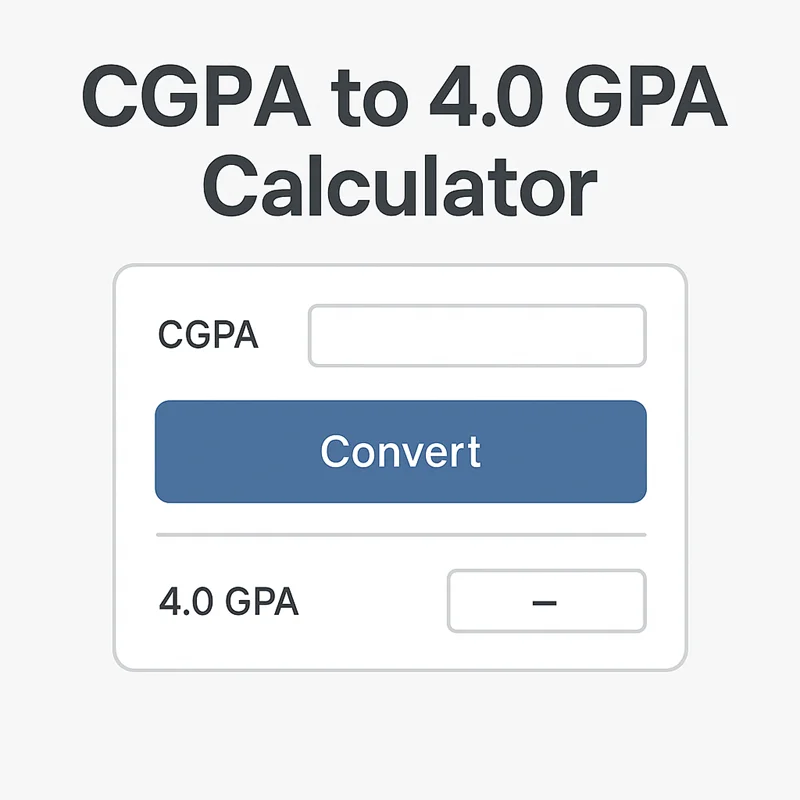
Conversion of grades across systems is a common challenge for students, employers, and academic institutions. The gpa calculator for vit university to 4.0 is a tool designed to standardise academic performance by translating the Vellore Institute of Technology (VIT) grade system into the globally familiar 4.0 scale. This article explores the history, objectives, implementation, state-level implications, and future prospects of conversion practices, focusing on how a gpa calculator for vit university to 4.0 can support mobility, equity, and clarity for stakeholders.
Understanding VIT’s Grading System and the Need for Conversion
VIT uses a credit-based grading system with percentage and letter grade interpretations that differ slightly from other Indian and international universities. That is why a gpa calculator for vit university to 4.0 becomes essential when VIT students apply abroad or for programs that require a 4.0 GPA representation. The calculator maps VIT marks, credit weightage, and letter grades into a 4.0-compatible grade point average, helping admissions officers and credential evaluators interpret an applicant’s academic standing with greater confidence.
Historical Context and Evolution
Historically, Indian universities used percentage scores and class-based classifications. VIT, like many progressive institutions, embraced a credit and grade-based transcript to align with international practices. The gpa calculator for vit university to 4.0 reflects this evolution — it emerged from the need to harmonize transcripts for international collaborations, student exchanges, and employment in multinational firms. Over time, conversion tools have shifted from informal spreadsheets to robust, documented calculators that can be embedded in student portals.
Objectives of a GPA Conversion Tool
The primary objectives of a gpa calculator for vit university to 4.0 include transparency, fairness, and portability. By converting local VIT scores into a 4.0 scale, the calculator ensures that students are judged on a comparable metric when competing internationally. Moreover, the gpa calculator for vit university to 4.0 supports scholarship committees and placement cells by giving a clear, consistent GPA value for ranking and selection processes. A well-documented conversion reduces disputes and accelerates decision timelines for both admission offices and recruiters.
Technical Implementation and Calculation Methodology
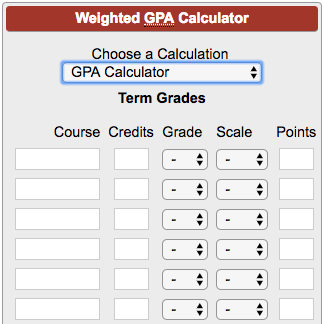
Technically, a gpa calculator for vit university to 4.0 takes into account course credits, grade points assigned by VIT, and any normalization policies. The algorithm sums the product of credit and grade point for each course and divides by total credits, then maps the resulting average into the 4.0 scale. Variants of the gpa calculator for vit university to 4.0 handle rounding rules, failed course policies, and re-evaluation outcomes to maintain accuracy and fairness. Institutions often publish mapping tables and worked examples so that students can reproduce results and understand the logic behind conversions.
Policy Framework and Institutional Adoption
Adoption of a gpa calculator for vit university to 4.0 requires institutional endorsement. Universities and regulatory bodies often issue guidelines to standardize conversion. For VIT students, an endorsed gpa calculator for vit university to 4.0 reduces disputes during admissions and credential assessment. Policy frameworks may specify whether percentage-to-GPA conversion uses linear mapping, tiered mapping, or percentile-based normalization — each approach influences the final gpa calculator for vit university to 4.0 outcome and stakeholder acceptance.
State-wise and Regional Impact
At the state and regional level, tools like a gpa calculator for vit university to 4.0 influence academic mobility. Students from various Indian states who attend VIT can use the gpa calculator for vit university to 4.0 when applying to central universities, state institutions, or overseas programs. The regional impact extends to scholarship distribution and placement statistics, where a consistent gpa calculator for vit university to 4.0 enables fair comparisons across cohorts and reduces administrative friction during inter-state admissions.
Social Dimensions: Accessibility and Women’s Empowerment
Academic conversion tools contribute to broader social goals. A reliable gpa calculator for vit university to 4.0 increases accessibility by simplifying credential recognition for women pursuing higher education and professional careers. When rural or first-generation students use a gpa calculator for vit university to 4.0 for applications, it levels the playing field by presenting a clear academic metric to scholarship committees and employers, supporting women empowerment schemes and rural development initiatives.
Linking Conversion Tools to Social Welfare Initiatives
Government and NGO programs that promote education access can integrate a gpa calculator for vit university to 4.0 into their advisory and mentoring services. By providing step-by-step guidance on how to compute a gpa calculator for vit university to 4.0, counselors help beneficiaries apply for state-wise benefits, scholarships, and fellowships, ensuring social welfare initiatives have measurable impact and reach previously underserved populations.
Success Stories and Case Studies
Several VIT alumni have benefited from transparent conversions. One such success involved a student from a rural district who used a gpa calculator for vit university to 4.0 to secure a scholarship for a master’s program in Europe. The conversion clarified the student’s standing and aided the international admissions committee in issuing an offer. Another placement success story highlighted how a gpa calculator for vit university to 4.0 helped multinational recruiters compare candidates across different educational systems and short-list talent more efficiently.
Comparative Analysis: Other Conversion Approaches
There are multiple approaches to conversion. Some institutions offer an official equivalence statement; others rely on third-party tools. A gpa calculator for vit university to 4.0 can be compared with percentage-to-GPA tables used by other Indian universities, percentile rank methods, and WES-style credential evaluations. When evaluating a gpa calculator for vit university to 4.0 against these options, factors such as transparency, reproducibility, and stakeholder acceptance determine which approach is most appropriate for a given context.
Challenges and Criticisms
Despite benefits, conversion tools face criticisms. Skeptics argue a gpa calculator for vit university to 4.0 can oversimplify nuances in grading, ignore course rigor differences, and potentially misrepresent student performance. Implementation inconsistencies across departments can also lead to disputes. To mitigate these concerns, a robust gpa calculator for vit university to 4.0 must be accompanied by documentation, normalization notes, and, where possible, contextual measures like percentile ranks or course narratives that preserve qualitative nuance in candidate evaluations.
Addressing Academic Integrity and Fairness
Fairness measures include handling failed courses, repeated attempts, and pass/fail grades within the gpa calculator for vit university to 4.0 logic. For instance, some calculators exclude non-credit pass/fail courses from the GPA denominator or apply the highest-attempt policy for repeats. Clear policy statements about such rules increase trust in a gpa calculator for vit university to 4.0 and support institutional integrity, minimizing grounds for appeal and ensuring predictable outcomes for students.
Implementation Roadmap for Institutions
For universities planning to adopt a gpa calculator for vit university to 4.0, a phased roadmap helps. Steps include stakeholder consultation, pilot testing with sample transcripts, calibration against international standards, and publishing methodology. Training placement officers, counselors, and students on using the gpa calculator for vit university to 4.0 ensures smooth adoption and reduces query volumes during admission seasons, while audits and feedback loops help refine methods over time.
Role of Technology and Automation
Digital platforms and student portals can embed a gpa calculator for vit university to 4.0, enabling real-time computations. Automated tools reduce manual errors and provide downloadable equivalence certificates. Integration with learning management systems allows students to preview their projected 4.0 GPA as they complete courses, thereby making the gpa calculator for vit university to 4.0 a proactive planning tool rather than just a retrospective one.
State-Level Policy Recommendations
State education boards and higher education councils can encourage uniform use of a gpa calculator for vit university to 4.0 by issuing guidelines and recognizing conversion certificates during inter-state admissions. A standardized gpa calculator for vit university to 4.0 across affiliated institutions simplifies mobility and reduces administrative overhead for admissions committees handling diverse transcripts, contributing to smoother national student flows and equitable opportunities.
Aligning with National and International Standards
Alignment with national accreditation agencies and international credential evaluation bodies improves the acceptance of a gpa calculator for vit university to 4.0 results. Institutions should document mapping choices and reference widely accepted scales when publishing a gpa calculator for vit university to 4.0 methodology to bolster credibility among global partner institutions. Clear alignment reduces the need for repeated assessments and supports fast-tracked decisions.
Communication Strategy and Student Outreach
Effective communication is essential. Universities should publish FAQs, how-to guides, and sample conversions explaining the gpa calculator for vit university to 4.0. Workshops and webinars can demystify the conversion process for students from marginalized backgrounds, connecting the gpa calculator for vit university to 4.0 with career counseling and placement readiness programs. Transparent outreach builds trust and reduces misinterpretations during critical application cycles.
Case Study: Placements and Employer Perception
Employers often prefer uniform metrics. Case studies show that when VIT provided a clear gpa calculator for vit university to 4.0 alongside transcripts, multinational recruiters found it easier to compare candidates. This clarity led to faster shortlist decisions and better matching of job requirements to candidate profiles, enhancing placement rates and long-term employer relationships.
International Admissions and Scholarship Applications
When applying abroad, many universities request GPAs on a 4.0 scale. Students using a gpa calculator for vit university to 4.0 report fewer delays and clearer communications with foreign admissions offices. Scholarship committees, in particular, value a transparent gpa calculator for vit university to 4.0 because it simplifies cross-national competition and ensures equitable award distribution across applicants from diverse grading traditions.
Comparative Example: VIT vs Other Institutions
Compared to some institutions that still primarily use percentage systems, VIT’s credit-based records, when converted through a gpa calculator for vit university to 4.0, offer a more granular view of student performance. This granularity benefits both students and evaluators, especially when the gpa calculator for vit university to 4.0 includes credit weighting and course-level detail, providing an informative snapshot of academic strengths and specialization.
Monitoring, Evaluation, and Continuous Improvement
Regular audits and feedback loops are necessary. Universities should periodically review how the gpa calculator for vit university to 4.0 performs in real-world admissions and recruitment scenarios. Feedback from international partners and employers can inform adjustments, ensuring the gpa calculator for vit university to 4.0 remains relevant and reliable. Tracking long-term performance of alumni who used the conversion as part of international placements can also provide validation.
Addressing Equity Across States and Demographics
Monitoring should include analysis of state-wise outcomes and demographic impacts. For example, if students from certain regions consistently see lower converted GPAs using a gpa calculator for vit university to 4.0, institutions must investigate whether curricular differences, grading practices, or other biases exist and adjust mapping policies accordingly to protect fairness and inclusivity.
Future Prospects and Innovations
The future of conversion tools includes AI-driven normalizations, context-aware GPA estimations, and blockchain-secured transcript verifications. An advanced gpa calculator for vit university to 4.0 could incorporate course difficulty indices, peer-group normalization, and machine-learning models that predict international equivalency with higher precision. Such innovations would enhance transparency while retaining human oversight for exceptional cases.
Potential for Policy-Level Adoption
At the policy level, education ministries could recommend a standard gpa calculator for vit university to 4.0 across state universities to promote mobility. Such a move would require stakeholder consensus but would significantly reduce friction for students crossing state or national boundaries and strengthen national portability of qualifications.
Recommendations for Students and Counselors
Students should keep detailed records of course credits and official grade sheets to use a gpa calculator for vit university to 4.0 accurately. Counselors should prepare explanatory notes that accompany converted GPA reports, clarifying rounding rules and treatment of special cases, which enhances the credibility of a gpa calculator for vit university to 4.0 during admissions review.
Practical Tips for Accurate Conversion
When using an institutional conversion tool, double-check credit allocations, ensure inclusion of only graded courses (if policy requires), and seek official confirmation if possible. Where ambiguity exists, include a calculation annex showing step-by-step computations to accompany the conversion output. This annex reduces queries and makes the process transparent for receiving institutions.
Challenges in Cross-System Comparisons
Converting grades is not merely arithmetic; it involves contextual interpretation. Variations in curricular rigor and assessment style mean a numeric conversion should be complemented by qualitative measures like transcripts, course syllabi, and recommendation letters for holistic evaluation. Relying solely on a number can obscure important distinctions in student preparation and experience.
Building Institutional Trust
Trust grows when institutions publish clear methodology and allow third-party review. By making the conversion process transparent and open to audit, VIT can build confidence among international admissions committees and employers, and thus increase the utility of the converted metric.
Deep-Dive Calculation Example (Step-by-Step)
To make conversions transparent, consider a step-by-step mock example. Suppose a student completes eight courses in a semester with varied credits: three 4-credit courses, three 3-credit courses, and two 2-credit courses.
Each course receives a letter grade that corresponds to standard grade points on a 10-point scale. Converting to a 4.0-based system requires these steps: first, normalize the local grade points to a consistent internal scale if necessary; second, multiply each normalized grade point by the course credit to produce weighted points; third, sum the weighted points and divide by the total credits to obtain a weighted average; and finally, apply the published mapping to transform the weighted average into the 4.0 equivalent, making clear any rounding conventions and handling of special cases.
Detailed Methodology and Mapping Choices
Institutions often debate mapping approaches. A linear mapping simply rescales the numeric range proportionally, while tiered mappings place percentage bands into discrete GPA values. Percentile-based approaches consider the distribution of marks within a cohort to compensate for unusually difficult examinations or lenient grading. More advanced methods use z-score normalization or rank-equivalence, where students’ positions within their cohort determine translated values. Each method has trade-offs: linear mappings are easy to reproduce, percentile approaches offer context, and statistical methods can adjust for irregularities but require more data governance.
Stakeholder Perspectives: Students, Faculty, Employers
Students appreciate clarity and predictability in converted results, especially when close to scholarship thresholds. Faculty input helps ensure that course rigor and learning outcomes are considered, preventing purely numerical conversions from overlooking academic depth. Employers value concise, comparable metrics but often request supplementary documents detailing course content, capstone projects, and practical experience that numerical conversions cannot capture. Engaging all three groups in designing conversion processes prevents misinterpretations and builds acceptance.
State-Level Case Profiles
Consider three hypothetical state-level scenarios to illustrate implications. In State A, where public universities still rely heavily on percentage grades, graduates applying to national research programs may face hurdles that an endorsed conversion procedure would alleviate. In State B, regional scholarship programs tie awards to GPA cutoffs used by central bodies; clear crosswalks reduce disputes. In State C, where higher education expansion has led to variability in grading standards, a normalization framework can improve comparability and reduce disadvantage for applicants from emerging institutions.
Integrating Conversion with Career Services
Placement offices can use conversion outputs to segment candidates for different employer interviews, identify high-potential students for leadership tracks, and generate aggregate reports demonstrating cohort performance to prospective recruiters. When conversion mechanisms are integrated into placement dashboards and alumni tracking systems, institutions can better demonstrate employability outcomes and long-term career trajectories, adding value to academic programs and regional economic development goals.
Comparisons with International Credential Evaluations
Credential evaluation agencies often perform course-by-course equivalencies and interpret transcripts in context. Institutional conversion tools can complement these services by providing initial, transparent mappings that agencies can reference. While agencies may adjust for international norms, providing a well-documented internal conversion reduces duplication of effort and improves turnaround times for students seeking rapid evaluations for early decision deadlines and rolling admissions.
Equity Considerations and Safeguards
Safeguards such as clinician reviews for outliers, appeals processes for disputed conversions, and anonymized audits help protect students. When conversion processes align with institutional fairness policies, they must be subject to oversight committees including student representatives, academic staff, and external advisors. These governance practices ensure that conversion tools contribute positively to access and do not entrench systemic biases.
Success Metrics and Monitoring
Institutions should define success metrics for their conversion frameworks. Examples include reduced time-to-offer for international applications, improved placement match rates, fewer appeals related to grade recognition, and stakeholder satisfaction indices. Monitoring these metrics over multiple admission cycles gives administrators evidence to refine methods, publish impact reports, and justify broader adoption or adjustment.
Training, Capacity Building, and Documentation
Training workshops for administrative staff, clear online calculators with transparent formulae, and printable equivalence certificates are practical outputs of a mature conversion initiative. Documentation should include assumptions, examples, and contact points for queries. Capacity building also extends to counselors and faculty who can advise students on course selection strategies that optimize outcomes under the translated scale without compromising academic integrity.
Cross-Sector Partnerships and Funding
Partnerships with government agencies, accreditation bodies, and philanthropic organizations can support the development and dissemination of robust conversion tools. Funding may be allocated for technical platform development, research on normative mapping, and outreach to underserved student populations. Cross-sector collaboration ensures that conversion efforts are not limited to isolated institutional advantages but contribute to systemic improvements in higher education mobility.
Legal and Regulatory Considerations
When producing official statements of equivalence, institutions must ensure legal compliance with data protection laws and certification standards. Proper record-keeping and secure issuance of digital equivalence documents reduce fraud risk and support verifiable claims in admission and employment processes. Ensuring legal and administrative rigor strengthens trust in conversion outputs.
Community Engagement and Grassroots Outreach
Community workshops, especially in rural and underserved regions, help demystify academic conversion and admissions processes. By providing hands-on guidance and accessible tools, outreach programs empower individuals who may be first-generation college applicants and who benefit most from clear conversion resources and counseling support.
Research Agenda and Academic Inquiry
Academic research can evaluate which mapping techniques best predict academic success in international programs and job performance in various sectors. Longitudinal studies tracking outcomes of students whose credentials were converted using different models can offer evidence-based recommendations to policymakers and universities. Rigorous inquiry helps refine methods and align conversion outputs with real-world measures of success.
International Student Mobility Trends
Global mobility trends show increasing demand for transparent equivalents as students pursue cross-border education for career and research opportunities. Clear equivalence statements reduce administrative workload for host institutions and allow receiving universities to make more confident decisions regarding preparedness and placement.
Technology Roadmap: Secure, Transparent Systems
Beyond basic calculators, a technology roadmap might include APIs for secure verification, dashboards for admissions teams, and tamper-proof certificates using cryptographic signatures. Such investments raise the institutional profile and make equivalence statements more readily acceptable to foreign partners and professional licensing bodies.
Budgetary Implications and Cost-Benefit Analysis
Developing an institutional conversion service has costs—software development, staff training, and audit mechanisms—but these expenses can be offset by improved placement revenues, increased scholarship awards securing high-quality candidates, and reduced administrative loads for admissions teams processing international applications. A cost-benefit analysis helps justify initial investments and guide phased rollouts.
Ethical Considerations and Transparency
Ethics require that conversion tools do not artificially inflate or deflate academic records. Full transparency about mapping choices and access to appeals protects students’ rights and preserves academic reputations. Ethical guidelines should be published alongside any tool, clarifying intent and limitations to end-users.
Preparing for Accreditation and External Review
As institutions seek national or international accreditation, conversion policies and their documentation may be evaluated. Demonstrating rigorous methodology, stakeholder engagement, and monitoring practices enhances institutional credibility and may form part of accreditation evidence dossiers.
Appendix: Sample Conversion Annex
An annex accompanying any official equivalence report might include a sample computation, a legend explaining abbreviations and grade points, a note on rounding rules, and contact details for the office issuing the equivalence. This annex enhances trust and makes the conversion usable in formal procedures where precise arithmetic steps may be required for compliance.
How to Use Online Conversion Tools Responsibly
Many online conversion utilities exist, but users should verify provenance before relying on results. Trusted tools are those published by the issuing university, recognized accreditation bodies, or reputable non-profit organizations. Responsible use includes retaining original transcripts, documenting each step of the calculation, and seeking official certification when the converted value is required for legal or formal purposes. Avoid relying solely on social media calculators or unverified spreadsheets.
Common Pitfalls and How to Avoid Them
Common mistakes include misreading credit values, including remedial or audited courses that should be excluded, and failing to adjust for repeated course attempts. Applicants often forget to include explanatory notes for non-standard grading elements, such as internships graded on pass/fail bases, or projects assessed by external examiners. To avoid these errors, create a personal audit trail of calculations and, where possible, obtain a countersigned equivalence from the registrar’s office.
Checklist for Applicants Preparing International Applications
- Gather official transcripts and syllabus descriptions for each major course.
- Use an institutionally recommended conversion tool as a first pass.
- Produce a calculation annex showing step-by-step arithmetic and rounding rules.
- Request an official certification if the receiving institution requires it.
- Prepare explanatory notes about non-credit experiential learning components.
- Keep digital and physical copies for future verification and appeals.
Guidance for Employers and Admissions Committees
Employers and admission officers should treat converted GPAs as informative rather than definitive. When evaluating candidates, combine the numeric conversion with supporting qualitative evidence such as project portfolios, technical assessments, and references. This multi-faceted approach reduces the risk of misclassification and ensures that conversion outputs serve as one component in a holistic assessment process.
Advocacy and Building Consensus Across Institutions
Advocacy for standardized conversions benefits from coalition-building among universities, accreditation agencies, and student groups. Pilot programs that compare converted outcomes with actual student performance in host institutions can provide persuasive evidence for wider adoption. Consensus-building workshops and pilot evaluations create the trust environment necessary for institutional agreements to accept mutual conversions without redundant credentialing.
Preparing for Specialized Programs and Professional Licensing
Professional programs and licensing bodies often have additional criteria beyond the 4.0 metric, including minimum course-specific grades, practical experience thresholds, and professional examinations. Applicants should verify whether professional regulators require certified equivalence reports and ensure that any conversion tool’s output is supplemented by official documentation and course narratives when needed.
Closing Summary
Conversion of academic records into a 4.0-equivalent metric is a practical necessity in an increasingly globalized education landscape. When conducted transparently, governed by clear policy, and accompanied by qualitative context, conversion tools substantially reduce friction for students and institutions. By following best practices—careful documentation, stakeholder engagement, and periodic evaluation—universities can deploy conversion services that enhance fairness, mobility, and opportunity for diverse student populations.
A final note to stakeholders: conversion systems thrive when accompanied by open dialogue, evidence-based refinement, and dedication to equity. Institutions that invest in clear, auditable conversion mechanisms not only simplify students’ transitions into global pathways but also underscore their commitment to fairness and transparency in assessment. As the landscape of higher education continues to evolve, these pragmatic tools will remain central to enabling talent mobility and fostering inclusive opportunities.
If you are a policy maker, counselor, or student representative, consider convening a small task group to pilot conversions, document outcomes, and produce actionable guidance. Small pilots reduce risk and build the evidence base needed for wider acceptance and institutionalization of best-practice approaches across the higher education sector. Begin with transparent mapping and iterative refinement — that approach yields durable, trusted conversion practices.